
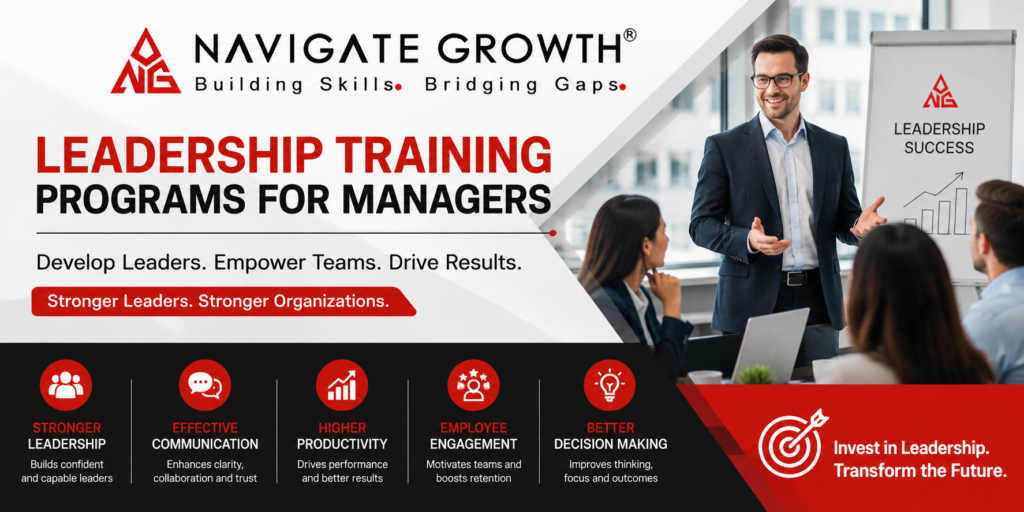
Leadership Training Programs for Managers That Inspire
Discover the best leadership training programs for managers to improve communication, productivity, teamwork, and business growth.
Introduction -Leadership Training Programs for Managers
In today’s competitive business environment, organizations need skilled leaders who can guide employees, improve productivity, and support business growth. Managers are not only responsible for handling daily operations but also for motivating employees, solving workplace problems, and creating a positive work culture. However, leadership is a skill that must be developed through continuous learning and practical experience. This is why leadership training programs for managers are becoming essential for businesses of every size.
A manager without leadership training may struggle with communication, employee engagement, conflict resolution, and decision-making. On the other hand, a trained manager can inspire teams, improve workplace relationships, and help organizations achieve long-term success. Leadership development programs help managers understand how to manage people effectively while adapting to changing workplace trends and business expectations.
Modern organizations are investing heavily in leadership training programs for managers because leadership directly impacts employee performance and company growth. Strong leaders create motivated teams, improve productivity, and build a healthy work environment where employees feel valued and supported.
What Are Leadership Training Programs for Managers?
Leadership training programs for managers are structured learning programs designed to improve managerial and leadership skills. These programs focus on helping managers become better leaders by teaching communication, emotional intelligence, strategic thinking, team management, and problem-solving skills.
Leadership training is important because many professionals are promoted into management positions based on technical expertise rather than leadership ability. While technical knowledge is valuable, managing employees requires a completely different set of skills. Leadership programs help bridge this gap by preparing managers for workplace responsibilities and leadership challenges.
These programs may include:
- Leadership workshops
- Communication training
- Team-building activities
- Coaching sessions
- Conflict management exercises
- Time management training
- Strategic leadership development
Some organizations conduct leadership training in classrooms, while others use online learning platforms or virtual workshops. Many companies also combine mentorship programs with practical exercises to improve learning outcomes.
Leadership training is not only beneficial for senior managers. New managers, team leaders, and supervisors can also benefit greatly from these programs because they help build confidence and leadership abilities early in a professional career.
Why Leadership Training Programs for Managers Are Important
The workplace environment has changed significantly over the years. Managers now face challenges such as remote work management, employee stress, changing technology, workplace diversity, and increasing competition. Without proper leadership development, managers may struggle to handle these responsibilities effectively.
Improves Leadership Confidence
Many managers lack confidence when leading teams because they have never received formal leadership training. Leadership development programs help managers understand their responsibilities and improve their ability to guide employees successfully.
Confident leaders communicate better, make stronger decisions, and motivate teams more effectively.
Strengthens Employee Relationships
Employees are more productive when they feel respected and supported by management. Leadership training helps managers improve communication and relationship-building skills.
Managers learn how to:
- Understand employee concerns
- Provide constructive feedback
- Encourage teamwork
- Build trust among employees
Strong workplace relationships improve employee morale and create a healthier work environment.
Supports Organizational Growth
Leadership quality directly affects business performance. Organizations with skilled leaders often experience:
- Higher employee engagement
- Better productivity
- Improved teamwork
- Faster problem-solving
- Lower employee turnover
Investing in leadership training programs for managers helps businesses achieve long-term success by developing strong leadership at every level.
Key Benefits of Leadership Training Programs for Managers
Better Communication Skills
Communication is one of the most important qualities of an effective leader. Poor communication often causes misunderstandings, reduced productivity, and workplace conflicts.
Leadership training helps managers improve:
- Verbal communication
- Non-verbal communication
- Listening skills
- Presentation abilities
- Feedback methods
Managers who communicate clearly can explain goals effectively, provide guidance to employees, and maintain stronger workplace relationships.
Good communication also helps employees feel more comfortable sharing ideas and concerns, which improves collaboration and teamwork.
Increased Employee Engagement
Employee engagement is essential for workplace success. Employees who feel motivated and appreciated are more likely to perform well and stay committed to the organization.
Leadership training teaches managers how to:
- Recognize employee achievements
- Encourage professional development
- Support employee well-being
- Build positive workplace relationships
When employees feel valued, they become more productive and contribute positively to organizational goals.
Improved Team Performance
Effective managers know how to guide teams toward success. Leadership development programs help managers understand team dynamics and improve collaboration among employees.
Managers learn how to:
- Delegate tasks efficiently
- Encourage teamwork
- Resolve team conflicts
- Maintain accountability
As a result, teams become more organized, productive, and goal-oriented.
Better Conflict Resolution
Conflict is a common part of workplace interactions. However, poor conflict management can negatively affect employee morale and productivity.
Leadership training helps managers develop professional conflict resolution techniques such as:
- Active listening
- Fair problem-solving
- Emotional control
- Negotiation skills
Managers who handle conflicts effectively create a more peaceful and positive work environment.
Stronger Decision-Making Skills
Managers make important business decisions every day. Leadership training improves analytical thinking and helps managers make informed decisions confidently.
Decision-making training teaches managers how to:
- Analyze workplace situations
- Evaluate risks
- Consider employee needs
- Develop strategic solutions
Strong decision-making improves workplace efficiency and supports business growth.
Types of Leadership Training Programs for Managers
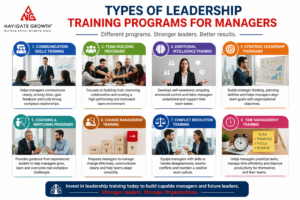
Communication Skills Training
This type of training focuses on improving communication abilities, listening skills, and workplace interactions. Managers learn how to communicate expectations clearly and provide effective feedback.
Emotional Intelligence Training
Emotional intelligence is the ability to understand and manage emotions effectively. Managers with strong emotional intelligence build better relationships with employees and handle workplace stress more successfully.
This training helps managers improve:
- Empathy
- Self-awareness
- Emotional control
- Relationship management
Team Building Programs
Team-building programs help managers improve collaboration and trust among employees. Managers learn how to motivate teams and encourage teamwork.
Strategic Leadership Training
Strategic leadership programs focus on long-term planning and business growth. Managers learn how to align team performance with organizational goals.
Coaching and Mentorship Programs
Experienced leaders guide managers through real workplace situations and leadership challenges. Mentorship programs provide practical learning experiences that improve confidence and leadership abilities.
Essential Leadership Skills Managers Need
| Leadership Skill | Importance |
|---|---|
| Communication Skills | Improves teamwork and workplace clarity |
| Emotional Intelligence | Strengthens employee relationships |
| Problem-Solving | Helps manage workplace challenges |
| Decision-Making | Supports organizational success |
| Time Management | Increases efficiency and productivity |
| Adaptability | Helps manage workplace changes |
| Team Leadership | Encourages collaboration |
Managers who develop these skills become more capable leaders and improve workplace performance significantly.
The Role of Emotional Intelligence in Leadership Success
Emotional intelligence is one of the most valuable skills managers can develop through leadership training programs for managers. While technical knowledge and experience are important, emotional intelligence helps leaders understand employee emotions, build stronger workplace relationships, and manage stressful situations effectively.
Managers with high emotional intelligence can recognize their own emotions and control their reactions during difficult situations. They are also better at understanding employee concerns, which improves communication and trust within teams. Employees usually feel more comfortable working with leaders who show empathy, patience, and understanding.
Leadership training programs often focus on emotional intelligence because it directly impacts workplace culture and employee engagement. Managers learn how to:
- Handle workplace pressure calmly
- Understand employee behavior
- Improve active listening skills
- Build trust with team members
- Resolve conflicts professionally
- Encourage positive communication
For example, if employees are stressed due to workload or deadlines, emotionally intelligent managers can identify the issue early and provide support before the situation becomes worse. This creates a more supportive and productive work environment.
Emotional intelligence also improves decision-making. Managers who understand emotions can avoid making decisions based on frustration or anger. Instead, they analyze situations carefully and choose solutions that benefit both employees and the organization.
Another important benefit of emotional intelligence is stronger teamwork. Employees are more likely to collaborate when managers encourage open communication and mutual respect. Leadership training helps managers create inclusive workplaces where employees feel valued and appreciated.
Organizations that focus on emotional intelligence in leadership development often experience:
- Higher employee satisfaction
- Better workplace communication
- Reduced conflicts
- Improved teamwork
- Increased employee retention
In today’s modern workplace, emotional intelligence is no longer optional. Businesses need leaders who can balance professional goals with employee well-being. This is why many companies now include emotional intelligence training as an essential part of leadership training programs for managers.
Managers who develop emotional intelligence become more adaptable, approachable, and effective in handling workplace challenges. These qualities help organizations maintain positive workplace cultures and improve long-term business performance.
How Leadership Training Helps Managers Handle Workplace Change
Workplace change has become common in modern organizations due to technology, market competition, and evolving employee expectations. Managers are often responsible for helping employees adapt to these changes while maintaining productivity and motivation. Without proper leadership skills, managing change can become difficult and stressful.
This is where leadership training programs for managers play a major role. These programs prepare managers to handle organizational changes effectively and support employees during transitions.
Workplace changes may include:
- New technology implementation
- Remote or hybrid work models
- Company restructuring
- Process improvements
- Policy changes
- Team expansion or downsizing
Employees often feel uncertain or resistant during periods of change. Leadership training teaches managers how to communicate changes clearly and reduce employee anxiety.
Managers learn important change management skills such as:
- Clear communication strategies
- Employee motivation techniques
- Problem-solving methods
- Stress management
- Team support practices
One of the biggest reasons organizational changes fail is poor communication. Employees may feel confused if managers do not explain the reasons behind the changes properly. Leadership training helps managers communicate openly and answer employee concerns confidently.
Training also teaches managers how to maintain team morale during difficult transitions. Employees are more likely to accept change when managers provide support and guidance.
Another important aspect of change management is adaptability. Leadership programs encourage managers to stay flexible and positive when facing unexpected challenges. Adaptable leaders can respond quickly to workplace problems and guide employees through uncertainty more effectively.
Organizations with skilled change leaders often experience:
- Faster adaptation to new systems
- Better employee cooperation
- Reduced workplace stress
- Improved productivity during transitions
- Higher employee confidence
In modern workplaces, change is unavoidable. Companies that invest in leadership training programs for managers can prepare leaders to manage transitions smoothly while maintaining employee trust and business performance.
Managers who understand change management become valuable assets because they help organizations stay competitive and future-ready.
The Impact of Leadership Training on Employee Productivity

Employee productivity is one of the most important factors affecting business success. Organizations with productive employees can achieve goals faster, improve customer satisfaction, and increase profitability. Managers play a major role in influencing employee performance, which is why leadership training programs for managers are essential for workplace productivity.
A skilled manager understands how to motivate employees, organize tasks efficiently, and maintain positive workplace relationships. Leadership training helps managers develop these abilities and improve team performance.
One of the biggest ways leadership training improves productivity is through better communication. Managers who communicate clearly reduce confusion and help employees understand expectations. This allows teams to work more efficiently and avoid unnecessary mistakes.
Leadership training also teaches managers effective time management and delegation skills. Many managers struggle because they try to handle too many responsibilities alone. Training helps them learn how to:
- Assign tasks effectively
- Set realistic goals
- Prioritize important work
- Monitor team progress
- Support employees when needed
When tasks are distributed properly, employees become more organized and productive.
Employee motivation is another important factor connected to productivity. Leadership training teaches managers how to recognize employee achievements and encourage professional growth. Motivated employees are more likely to work efficiently and contribute positively to team goals.
Managers also learn problem-solving and conflict resolution techniques through leadership development programs. Workplace conflicts and unresolved issues can reduce productivity significantly. Skilled leaders can handle problems quickly and maintain a positive work environment.
Organizations that invest in leadership training programs for managers often notice improvements such as:
- Increased employee efficiency
- Better teamwork and collaboration
- Reduced absenteeism
- Improved workplace morale
- Faster project completion
- Higher employee engagement
Another major productivity benefit is employee retention. Employees are more likely to remain loyal to organizations where managers provide support and professional guidance. Reduced employee turnover saves businesses time and resources spent on hiring and training new staff.
Leadership training also helps managers adapt to changing workplace demands and technology. Managers who continue learning can guide employees more effectively and maintain productivity during organizational changes.
Overall, leadership development has a direct impact on workplace performance. Managers who receive proper training can create productive, motivated, and goal-oriented teams that contribute to long-term business success.
How Leadership Training Improves Workplace Culture
Workplace culture has a major impact on employee satisfaction and business success. Managers influence workplace culture because employees often follow leadership behavior and workplace standards set by management.
Leadership training programs for managers help create a positive work culture by teaching managers how to:
- Respect employee opinions
- Encourage collaboration
- Promote diversity and inclusion
- Support employee well-being
- Handle workplace stress professionally
A healthy workplace culture improves employee motivation, reduces turnover rates, and strengthens organizational reputation.
Employees who work in positive environments are generally more productive, engaged, and loyal to the organization.
Best Leadership Training Methods
Organizations use various training methods depending on learning goals and business requirements.
Workshops and Seminars
Interactive workshops allow managers to participate in discussions, activities, and leadership exercises.
Online Leadership Training
Online learning platforms provide flexibility for busy professionals and remote teams.
Role-Playing Activities
Managers practice handling workplace challenges in realistic situations. This improves problem-solving and communication skills.
Coaching Sessions
Professional coaches provide personalized guidance to help managers improve leadership abilities.
Group Discussions
Group discussions encourage teamwork, idea-sharing, and collaborative problem-solving.
Practical learning methods are often more effective because they help managers apply leadership concepts in real workplace situations.
Future Trends in Leadership Development
Leadership development continues to evolve with changing workplace demands and technology advancements.
Some important trends include:
- AI-powered leadership learning platforms
- Virtual coaching programs
- Remote leadership training
- Personalized learning experiences
- Diversity and inclusion leadership training
- Data-driven employee performance analysis
Modern organizations now focus on flexible and technology-based training solutions to improve leadership effectiveness.
Conclusion
Strong leadership is one of the most valuable assets for any organization. Investing in leadership training programs for managers helps businesses improve communication, productivity, teamwork, employee engagement, and workplace culture.
Managers who receive proper leadership training become more confident, adaptable, and capable of handling workplace challenges effectively. These programs also help organizations prepare future leaders who can support long-term business growth.
As businesses continue to evolve, leadership development will remain essential for companies that want to stay competitive and successful in the future.
Frequently Asked Questions (FAQs)
1. What are leadership training programs for managers?
Leadership training programs for managers are professional development programs designed to improve leadership, communication, decision-making, emotional intelligence, and team management skills. These programs help managers become more effective leaders and improve workplace performance.
2. Why are leadership training programs important for businesses?
Leadership training improves employee engagement, workplace productivity, teamwork, and communication. Businesses with skilled leaders often experience better employee retention and stronger organizational growth.
3. What skills do managers learn in leadership training?
Managers learn communication skills, emotional intelligence, problem-solving, conflict resolution, strategic thinking, decision-making, time management, and team leadership abilities.
4. How do leadership training programs improve employee engagement?
Leadership training teaches managers how to motivate employees, recognize achievements, communicate effectively, and create supportive work environments. This helps employees feel valued and engaged.
5. Are online leadership training programs effective?
Yes, online leadership training programs are highly effective when combined with practical learning activities and interactive sessions. They also provide flexibility for busy professionals.
6. How often should managers receive leadership training?
Leadership development should be continuous. Organizations should provide regular training sessions to help managers stay updated with workplace trends and leadership strategies.
7. Can small businesses benefit from leadership training programs?
Absolutely. Small businesses can improve productivity, teamwork, employee satisfaction, and long-term growth through effective leadership development programs.
8. What is the biggest benefit of leadership training for managers?
One of the biggest benefits is improved communication and team management. Strong leaders create motivated teams, reduce workplace conflicts, and improve overall business performance.
 Contact Us
Looking to implement effective leadership training programs for managers ? Reach out to our team for customized solutions.
 Address:
Vivek Khand, Gomti Nagar, Lucknow, India
 Email:
 Phone:
- +91 99569 98880
- +91 94100 66699
 Website:
https://navigategrowth.in/
Instagram: https://www.instagram.com/thegrowthmindset.official/