
10 Powerful Leadership Training Programs for Managers
Leadership training programs for managers help improve communication, decision-making, and team performance for lasting business success.
Leadership Training Programs for Managers- Introduction
Strong leadership is the foundation of every successful organization. Companies that invest in leadership training programs for managers create better teams, improve productivity, and achieve long-term business growth. Managers are responsible for guiding employees, solving problems, and ensuring business goals are achieved effectively.
In today’s competitive business environment, organizations need skilled managers who can handle challenges, motivate teams, and adapt to changing workplace demands. Leadership training helps managers build essential skills such as communication, decision-making, conflict resolution, and strategic thinking.
This blog explains the importance of leadership training programs for managers, their key benefits, essential components, and how businesses can choose the right training program.
Table of Contents
- What Are Leadership Training Programs for Managers?
- Importance of Leadership Training Programs for Managers
- Core Leadership Skills Every Manager Needs
- Key Components of Leadership Training Programs
- Benefits of Leadership Training Programs for Managers
- Types of Leadership Training Programs for Managers
- Leadership Training Strategies for Modern Workplaces
- Common Mistakes Managers Make Without Training
- How Leadership Training Improves Company Culture
- Role of Technology in Leadership Training
- How to Choose the Right Leadership Training Program
- Challenges in Leadership Training Programs
- Future Trends in Leadership Training
- Conclusion
- FAQs
What Are Leadership Training Programs for Managers?
Leadership training programs for managers are professional development initiatives designed to improve leadership abilities and management skills. These programs help managers learn how to lead teams effectively, communicate clearly, and make better business decisions.
Training programs may include workshops, online courses, mentoring sessions, coaching, role-playing exercises, and real-world case studies. The main goal is to prepare managers to handle responsibilities confidently while improving employee performance and workplace culture.
Importance of Leadership Training Programs for Managers
Leadership training plays a critical role in organizational success. Managers influence employee morale, productivity, and overall business performance. Without proper training, managers may struggle with communication, conflict management, and decision-making.
Here are some reasons why leadership training is important:
1. Improves Communication Skills
Effective communication helps managers provide clear instructions, listen to employees, and create a positive work environment. Leadership training teaches managers how to communicate professionally and confidently.
2. Builds Strong Decision-Making Abilities
Managers make important decisions every day. Training programs help them analyze situations, evaluate risks, and make informed decisions that benefit the organization.
3. Enhances Team Productivity
Well-trained managers motivate employees, improve teamwork, and increase productivity. Employees perform better when they receive proper guidance and support.
4. Increases Employee Engagement
Leadership training helps managers understand employee needs and create a supportive work culture. Engaged employees are more productive and loyal to the organization.
5. Supports Business Growth
Organizations with strong leadership teams are better prepared to achieve business goals and adapt to industry changes.
Core Leadership Skills Every Manager Needs
Managers need a combination of technical knowledge and interpersonal abilities to lead teams successfully. Leadership training programs for managers focus on developing these essential skills.
Problem-Solving Skills
Managers often face workplace challenges and unexpected situations. Strong problem-solving skills help leaders make quick and effective decisions.
Adaptability
Modern workplaces change rapidly due to technology and market trends. Leadership training teaches managers how to adapt to changes confidently.
Team Motivation
A good manager motivates employees to achieve organizational goals. Training programs help managers understand different motivational techniques.
Delegation Skills
Effective delegation improves productivity and allows managers to focus on strategic tasks.
Performance Management
Managers learn how to evaluate employee performance, provide feedback, and support professional growth.
Key Components of Leadership Training Programs for Managers
Successful leadership training programs focus on multiple areas of management and leadership development. Leadership training programs for managers help businesses improve workplace productivity and employee engagement.
Communication Skills Training
Managers learn verbal and non-verbal communication techniques, active listening, presentation skills, and professional interaction methods.
Conflict Resolution
Training helps managers resolve workplace disputes professionally and maintain healthy team relationships.
Time Management
Managers learn how to prioritize tasks, manage deadlines, and improve overall efficiency.
Emotional Intelligence
Understanding emotions and managing relationships effectively is an essential leadership skill. Emotional intelligence training improves empathy and workplace collaboration.
Strategic Thinking
Managers are trained to plan effectively, identify opportunities, and make long-term business decisions.
Coaching and Mentoring
Leadership training teaches managers how to guide employees, provide constructive feedback, and support career development.
Benefits of Leadership Training Programs for Managers
Leadership training provides long-term advantages for both employees and organizations. Businesses that invest in management development often experience higher productivity and improved workplace satisfaction.
Major Benefits Include:
- Better communication between teams and management
- Improved employee confidence and morale
- Increased productivity and efficiency
- Stronger teamwork and collaboration
- Better decision-making abilities
- Reduced employee turnover
- Improved customer satisfaction
- Enhanced workplace culture
- Stronger conflict-resolution skills
- Increased business growth opportunities
Better Employee Performance
Employees perform better under capable leadership. Trained managers provide direction, encouragement, and performance feedback.
Reduced Workplace Conflicts
Managers with conflict-resolution skills can handle disagreements effectively and maintain a positive work environment.
Higher Employee Retention
Employees are more likely to stay in organizations where managers support and value them.
Improved Workplace Culture
Leadership training promotes collaboration, trust, and professionalism within teams.
Increased Organizational Efficiency
Managers who understand leadership principles can improve processes, productivity, and overall business operations.
Types of Leadership Training Programs for Managers
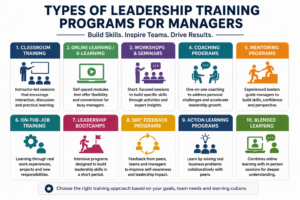
Organizations can choose from different leadership training methods based on business goals and employee needs.
| Training Type | Purpose | Benefits |
|---|---|---|
| Online Training | Flexible digital learning | Cost-effective and convenient |
| Workshops | Interactive practical sessions | Better engagement |
| Executive Coaching | Personalized leadership guidance | Skill-focused improvement |
| Mentorship Programs | Learning from experienced leaders | Practical business knowledge |
| Team-Building Activities | Strengthening collaboration | Better teamwork |
| Hybrid Training | Combination of online and offline learning | Flexible learning experience |
Online Leadership Training
Online Leadership Training
Online programs provide flexibility and allow managers to learn at their own pace.
In-Person Workshops
These workshops provide hands-on learning experiences, group discussions, and networking opportunities.
Executive Coaching
Executive coaching offers personalized guidance to managers for improving leadership performance.
Mentorship Programs
Experienced leaders mentor managers to share practical knowledge and industry insights.
Team-Building Programs
These programs focus on collaboration, trust-building, and improving team relationships.
Leadership Training Strategies for Modern Workplaces
Businesses today need modern leadership strategies to manage hybrid teams, remote employees, and changing customer expectations. Effective leadership training programs for managers focus on practical workplace leadership methods that improve productivity and business growth.
Important Leadership Strategies
Organizations using leadership training programs for managers often experience better team collaboration.
- Encourage transparent communication
- Build employee trust and accountability
- Promote teamwork and collaboration
- Support innovation and creative thinking
- Improve adaptability in changing markets
- Develop problem-solving abilities
- Focus on employee engagement and motivation
Organizations like Navigate Growth understand the importance of continuous leadership development for improving workplace performance and long-term business success.
Leadership Training for Remote and Hybrid Teams
Remote and hybrid workplaces have changed the way managers lead employees. Leadership training helps managers understand how to handle virtual communication, remote collaboration, and employee productivity.
Benefits of Remote Leadership Training
- Better virtual communication skills
- Improved remote team collaboration
- Increased employee accountability
- Better time management
- Stronger digital leadership abilities
- Improved online meeting management
Managers who receive remote leadership training can maintain strong team relationships even when employees work from different locations.
Best Practices for Effective Leadership Development
Organizations should follow proven strategies to maximize leadership training effectiveness.
Best Practices Include:
- Conduct regular leadership assessments
- Create personalized learning plans
- Provide mentoring opportunities
- Encourage practical learning experiences
- Offer continuous training sessions
- Use employee feedback for improvement
- Combine online and offline learning methods
Leadership development should not be treated as a one-time activity. Continuous learning helps managers improve their leadership skills consistently.
Leadership Training Programs in India
Leadership training programs are becoming increasingly popular in India as businesses focus on employee development and workplace productivity. Companies in major cities are investing heavily in leadership development programs to prepare managers for future challenges. Modern leadership training programs for managers focus on strategic thinking and employee development.
Popular Leadership Training Locations in India
- Leadership training programs in Delhi
- Leadership training programs in Gurgaon
- Leadership training programs in Noida
- Leadership training programs in Bangalore
- Leadership training programs in Mumbai
Many organizations prefer professional leadership development companies such as Navigate Growth for customized training solutions and business-focused learning programs.
Leadership Training for First-Time Managers
First-time managers often struggle with communication, delegation, and team management responsibilities. Specialized leadership training helps new managers transition smoothly into leadership roles.
Skills First-Time Managers Need
- Employee communication skills
- Team management abilities
- Decision-making confidence
- Performance evaluation techniques
- Conflict-resolution methods
- Leadership confidence and motivation
Strong training programs help first-time managers become confident leaders while improving employee satisfaction and productivity.
Leadership Training ROI for Businesses
Leadership training provides measurable returns for organizations. Businesses that invest in management development often experience long-term growth and operational improvements.
| Leadership Training Area | Business Impact |
|---|---|
| Employee Productivity | Improved work |
Modern businesses require advanced leadership strategies to manage changing work environments.
Personalized Learning Plans
Customized training programs help managers focus on specific leadership weaknesses and strengths.
Continuous Learning Culture
Organizations should encourage continuous learning rather than one-time training sessions.
Interactive Learning Methods
Role-playing exercises, case studies, and group discussions improve learning effectiveness.
Leadership Assessments
Regular assessments help organizations measure manager performance and training progress.
Common Mistakes Managers Make Without Training
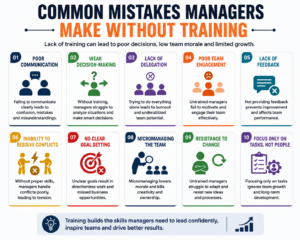
Without proper leadership development, managers may face several workplace challenges.
Poor Communication
Managers who lack communication skills may create confusion among employees.
Micromanagement
Excessive control can reduce employee confidence and workplace productivity.
Inconsistent Decision-Making
Untrained managers may struggle to make fair and strategic decisions.
Weak Conflict Management
Failure to resolve workplace conflicts can negatively affect team morale.
How Leadership Training Improves Company Culture
Leadership directly affects organizational culture. Trained managers help create a positive and productive work environment. Leadership training programs for managers help businesses improve workplace productivity and employee engagement.
Encourages Employee Collaboration
Leadership programs teach managers how to build trust and teamwork.
Promotes Workplace Transparency
Managers learn the importance of honest communication and accountability.
Creates Growth Opportunities
Employees feel motivated when managers support skill development and career advancement.
Role of Technology in Leadership Training
Technology has transformed the way organizations deliver leadership training.
Learning Management Systems (LMS)
LMS platforms allow companies to manage employee training efficiently.
Virtual Meetings and Webinars
Online webinars and video conferencing make leadership training accessible globally.
Mobile Learning Applications
Managers can access training materials anytime using smartphones and tablets.
AI-Powered Training Tools
Artificial intelligence provides personalized learning experiences and performance tracking.
How to Choose the Right Leadership Training Program
Selecting the right leadership training program is essential for achieving business goals.
Identify Training Needs
Understand the skills managers need to improve, such as communication, decision-making, or team management.
Check Program Content
Choose programs that include practical learning methods, real-world examples, and interactive activities.
Evaluate Trainer Experience
Experienced trainers provide valuable industry knowledge and practical leadership insights.
Consider Flexibility
Online and hybrid programs offer flexibility for busy managers.
Measure Results
Track employee performance, productivity, and engagement to evaluate the success of training programs.
Challenges in Leadership Training Programs
While leadership training provides many benefits, organizations may face some challenges.
- Limited training budgets
- Lack of employee participation
- Time management issues
- Difficulty measuring training effectiveness
- Resistance to change
Businesses can overcome these challenges by creating structured training plans and encouraging continuous learning.
Future Trends in Leadership Training
Modern leadership training is evolving with technology and workplace changes. Businesses in Gurgaon and Delhi are increasingly adopting leadership training programs for managers.
AI-Based Learning
Artificial intelligence helps personalize learning experiences and track employee progress.
Virtual Reality Training
VR-based training allows managers to practice real-world leadership situations.
Microlearning
Short and focused training modules improve learning efficiency and retention.
Remote Leadership Training
As remote work grows, leadership programs now focus on virtual communication and remote team management.
Conclusion
Leadership training programs for managers are one of the most valuable investments organizations can make for long-term success. Strong leadership improves employee engagement, workplace productivity, and overall business performance. In today’s competitive business environment, managers need more than technical expertise. They must also develop communication skills, emotional intelligence, strategic thinking, and decision-making abilities.
Organizations that provide regular leadership training create confident managers who can inspire teams, solve workplace challenges, and support business growth effectively. These programs also help businesses reduce employee turnover, improve collaboration, and build a positive workplace culture.
Modern leadership training is evolving rapidly with technology-driven learning, AI-based tools, virtual training platforms, and personalized coaching methods. Companies that adapt to these trends can prepare managers for future workplace demands and leadership responsibilities.
By choosing the right leadership training programs for managers, businesses can build future-ready leaders who contribute to innovation, productivity, and sustainable organizational success. Continuous leadership development not only strengthens management performance but also creates a strong foundation for long-term growth and employee satisfaction.
Leadership training programs for managers are essential for building strong leaders and successful organizations. These programs improve communication, decision-making, productivity, and employee engagement. Businesses that invest in leadership development create better workplace cultures and achieve long-term growth.
By choosing the right training program and focusing on continuous learning, organizations can prepare managers to handle modern workplace challenges effectively. Strong leadership not only benefits managers but also improves overall business performance and employee satisfaction.
FAQs
1. Why are leadership training programs important for managers?
Leadership training programs help managers improve communication, decision-making, problem-solving, and team management skills. These programs prepare managers to handle workplace challenges effectively while improving employee productivity and organizational performance.
2. What skills are taught in leadership training programs?
Leadership training programs focus on communication, strategic thinking, emotional intelligence, conflict resolution, delegation, performance management, and team-building skills. These abilities help managers lead employees more effectively.
3. How do leadership training programs benefit organizations?
Organizations benefit through increased productivity, stronger teamwork, improved employee engagement, reduced workplace conflicts, and better business growth opportunities. Trained managers also create a more positive workplace culture.
4. Are online leadership training programs effective?
Yes, online leadership training programs are highly effective because they provide flexible learning opportunities. Managers can access training materials anytime and improve leadership skills at their own pace.
5. How can companies measure leadership training success?
Businesses can measure success by tracking employee performance, engagement levels, productivity, workplace communication, and overall management effectiveness after training implementation.
6. What is the best leadership style for managers?
The best leadership style depends on the organization and team needs. However, transformational leadership is widely preferred because it focuses on motivation, innovation, and employee development.
7. How often should managers attend leadership training?
Managers should participate in leadership training regularly to stay updated with workplace trends, communication strategies, and management techniques. Continuous learning improves long-term leadership effectiveness.
8. Can small businesses benefit from leadership training programs?
Yes, small businesses can significantly benefit from leadership training because strong management improves employee productivity, customer satisfaction, and business growth even with limited resources.
 Address:
 Email:
 Phone:
 Website: