8 Innovative Employee Training and Development Programs
Explore employee training and development programs that improve employee skills, productivity, leadership, and business growth across industries.
Table of Contents
- Introduction
- Why Employee Training Matters in Modern Businesses
- Growing Demand for Employee Training Across Indian Cities
- Benefits of Employee Training and Development Programs
- Importance of Continuous Learning in Organizations
- Types of Employee Training Used by Companies
- 8 Innovative Employee Training and Development Programs
- How Employee Training Improves Business Performance
- Best Practices for Successful Employee Training Programs
- Industry-Specific Employee Training Solutions
- Employee Training Strategies for Remote and Hybrid Teams
- Role of Technology in Employee Training and Development Programs
- Common Challenges in Employee Training
- ROI of Employee Training and Development Programs
- How Navigate Growth Helps Companies Across India
- Future Trends in Workforce Development
- How to Choose the Right Employee Training Partner
- Conclusion
- FAQs
Introduction
In today’s competitive business environment, companies must continuously improve employee skills to remain productive and profitable. Organizations across India are investing in employee training and development programs to strengthen workforce capabilities, improve communication, increase productivity, and build future-ready teams.
From IT companies in Bangalore and Hyderabad to corporate offices in Delhi, Noida, and Gurugram, businesses are realizing that employee growth directly impacts organizational success. Industries such as healthcare, manufacturing, retail, logistics, finance, and technology are increasingly focusing on workforce learning to maintain a competitive advantage.
Modern workplaces require employees to adapt quickly to changing technologies, customer expectations, communication methods, and leadership responsibilities. This is why businesses in Lucknow, Delhi NCR, and other growing business hubs are partnering with professional training providers like Navigate Growth to create customized learning solutions.
Effective employee training and development programs not only improve employee performance but also reduce turnover, increase employee engagement, strengthen workplace culture, and improve customer satisfaction. Companies that invest in employee learning are better prepared to face market challenges and future business demands.
Organizations that focus on workforce development create a culture of learning where employees feel motivated, valued, and prepared for future challenges. Companies that ignore employee learning often struggle to retain talented professionals and maintain consistent productivity levels.
Why Employee Training Matters in Modern Businesses
Employee training has become one of the most important investments for organizations. Businesses that fail to train employees regularly often face:
- Reduced productivity
- Poor communication
- Low employee morale
- High turnover rates
- Weak leadership
- Customer dissatisfaction
Training ensures that employees remain skilled, motivated, and aligned with organizational goals.
Helps Employees Adapt to Change
Technology and workplace processes are changing rapidly. Employees need regular learning opportunities to stay updated with modern systems, digital tools, and industry trends.
Organizations across Bangalore, Hyderabad, and Noida are increasingly using employee training and development programs to support digital transformation and workforce modernization.
Builds Employee Confidence
Training improves employee confidence by helping them understand their roles more effectively. Skilled employees are more likely to perform tasks efficiently and contribute positively to business goals.
Encourages Innovation
Employees who continuously learn new skills become more creative and innovative. Training programs encourage employees to think critically, solve problems efficiently, and contribute fresh ideas to the organization.
Growing Demand for Employee Training Across Indian Cities
The demand for professional workforce development is growing rapidly in India. Companies across major business cities are actively investing in employee learning solutions.
Employee Training in Delhi
Businesses in Delhi are focusing on leadership development, communication skills, workplace productivity, and team management programs. Corporate organizations are using structured training sessions to improve employee engagement and operational efficiency.
Employee Training in Gurugram
As one of India’s major corporate hubs, Gurugram has a strong demand for professional learning solutions. Companies here invest heavily in:
- Leadership training
- Sales development
- Customer service training
- Soft skills enhancement
- Team-building workshops
Employee Training in Bangalore
Known as India’s technology hub, Bangalore requires continuous technical upskilling programs. IT companies regularly invest in:
- Cybersecurity training
- AI and automation learning
- Software development training
- Digital transformation programs
Modern tech organizations heavily depend on employee training and development programs to remain competitive.
Employee Training in Hyderabad
Companies in Hyderabad focus on hybrid workforce training, communication development, managerial skills, and employee engagement strategies.
Employee Training in Noida
Organizations in Noida are increasingly adopting customized corporate learning programs for IT, BPO, and service-based industries. Training helps improve workplace productivity and collaboration.
Employee Training in Lucknow
Businesses in Lucknow are rapidly investing in employee development to compete with larger metropolitan companies. Local industries are using workforce learning to improve customer service, communication, and leadership capabilities.
Benefits of Employee Training and Development Programs
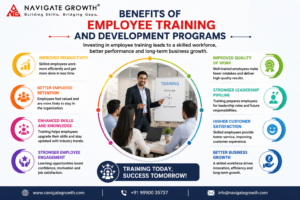
Professional workforce learning offers long-term advantages for organizations.
Improved Productivity
One of the biggest benefits of employee training and development programs is increased employee efficiency. Employees who receive proper training complete tasks faster and with greater accuracy.
Better Employee Retention
Employees prefer organizations that support career growth and skill development. Training programs improve employee satisfaction and reduce turnover rates.
Stronger Workplace Culture
Continuous learning creates a positive work environment where employees feel valued and motivated.
Improved Communication
Communication-focused training programs improve teamwork, collaboration, and customer interactions.
Better Leadership Development
Leadership training helps organizations build future managers and decision-makers internally.
Increased Customer Satisfaction
Well-trained employees provide better customer experiences, resulting in stronger client relationships and improved brand reputation.
Importance of Continuous Learning in Organizations
Continuous learning has become essential for modern businesses. Organizations that regularly update employee skills perform better in competitive industries.
Companies implementing continuous employee training and development programs experience:
- Higher employee engagement
- Better innovation
- Improved workplace collaboration
- Increased adaptability
- Stronger organizational growth
Employees who continuously learn are more confident, motivated, and prepared for future challenges.
Businesses in Delhi, Noida, and Bangalore are increasingly moving from one-time workshops to long-term learning strategies.
Types of Employee Training Used by Companies
Modern organizations use different types of training programs depending on industry requirements and business goals.
Technical Skills Training
Technical learning focuses on improving industry-specific knowledge and technical expertise.
Examples include:
- Software training
- Coding programs
- Machine operations
- Data analysis training
- Cybersecurity learning
Soft Skills Training
Soft skills programs improve interpersonal communication and workplace collaboration.
Popular soft skills include:
- Communication skills
- Public speaking
- Emotional intelligence
- Teamwork
- Problem-solving
Leadership Training
Leadership development programs prepare managers and supervisors to lead teams effectively.
Training areas include:
- Decision-making
- Conflict management
- Team leadership
- Strategic thinking
- Employee motivation
Compliance Training
Compliance-focused employee training and development programs help organizations maintain legal and workplace standards.
Sales and Customer Service Training
These programs improve customer handling, negotiation skills, and sales performance.
8 Innovative Employee Training and Development Programs
1. Leadership Development Programs
Leadership training helps managers improve communication, decision-making, and team management skills.
Organizations in Delhi, Gurugram, and Noida widely use leadership-focused employee training and development programs to build future-ready leaders.
Benefits
- Improved leadership abilities
- Better employee motivation
- Higher team productivity
- Stronger workplace relationships
2. Technical Skills Training
Technical programs help employees stay updated with modern technologies and digital tools.
Companies in Bangalore and Hyderabad invest in:
- AI learning
- Software development
- Cloud computing
- Cybersecurity training
3. Soft Skills Development Programs
Soft skills training improves workplace communication and collaboration.
Training focuses on:
- Public speaking
- Communication skills
- Emotional intelligence
- Team coordination
4. Employee Onboarding Programs
Structured onboarding programs help new employees understand company culture and responsibilities quickly.
Effective onboarding improves:
- Employee retention
- Workplace confidence
- Team integration
5. Sales and Customer Service Training
Sales-focused organizations use training programs to improve:
- Customer communication
- Negotiation skills
- Sales strategies
- Relationship management
6. Compliance and Workplace Safety Training
Industries such as manufacturing and healthcare require safety-focused employee training and development programs to maintain workplace standards.
7. Digital Learning and E-Learning Programs
Online learning platforms allow employees to learn anytime and anywhere.
Digital learning provides:
- Flexible schedules
- Cost-effective learning
- Faster knowledge sharing
- Remote workforce support
8. Performance Improvement Training
Performance-focused programs identify employee skill gaps and provide targeted learning solutions.
These programs improve:
- Productivity
- Accountability
- Efficiency
- Employee performance
How Employee Training Improves Business Performance
Training directly impacts organizational growth and operational success.
Better Team Collaboration
Employees who receive communication and teamwork training collaborate more effectively with colleagues.
Reduced Workplace Errors
Technical and compliance training reduces operational mistakes and workplace risks.
Faster Decision-Making
Leadership and problem-solving programs improve employee confidence and decision-making abilities.
Higher Employee Engagement
Employees feel more valued when organizations invest in their professional growth.
Best Practices for Successful Employee Training Programs
Organizations should follow structured approaches to achieve the best results from employee training and development programs.
Identify Skill Gaps
Companies should first identify employee weaknesses and performance gaps before creating training strategies.
Set Clear Learning Goals
Training objectives should align with business goals and employee responsibilities.
Use Interactive Learning Methods
Interactive sessions, workshops, role-playing activities, and practical exercises improve learning effectiveness.
Track Employee Progress
Businesses should measure employee performance before and after training to evaluate improvement.
Encourage Continuous Learning
Organizations should promote long-term learning instead of one-time training sessions.
Industry-Specific Employee Training Solutions
IT Industry
IT companies require:
- Technical certifications
- Cybersecurity awareness
- AI learning
- Agile methodology training
Manufacturing Industry
Manufacturing businesses focus on:
- Safety procedures
- Quality control
- Machine handling
- Operational efficiency
Healthcare Industry
Healthcare organizations prioritize:
- Patient communication
- Emergency management
- Compliance training
- Team coordination
Retail Industry
Retail businesses emphasize:
- Customer service
- Product knowledge
- Communication skills
- Sales performance
Employee Training Strategies for Remote and Hybrid Teams
Remote work has changed how organizations train employees.
Companies now use:
- Virtual workshops
- Online learning platforms
- Video-based training
- Hybrid learning models
Businesses in Hyderabad, Bangalore, and Noida are increasingly adopting digital learning solutions for remote workforce development.
Role of Technology in Employee Training and Development Programs
Technology has transformed modern workforce learning.
AI-Powered Learning
Artificial intelligence helps create personalized learning experiences for employees.
Learning Management Systems
Organizations use LMS platforms to track employee progress and training performance.
Virtual Reality Training
VR-based simulations help employees practice real-world workplace scenarios safely.
Common Challenges in Employee Training
Despite the benefits, businesses often face:
- Limited employee participation
- Budget constraints
- Time management issues
- Difficulty measuring ROI
Organizations can overcome these challenges through customized and flexible training solutions.
ROI of Employee Training and Development Programs
Businesses investing in employee training and development programs often experience measurable returns.
Increased Productivity
Employees perform tasks faster and more efficiently.
Better Employee Retention
Training improves employee loyalty and job satisfaction.
Stronger Customer Relationships
Well-trained employees provide better customer experiences.
Long-Term Business Growth
Organizations with skilled employees adapt more effectively to market changes.
How Navigate Growth Helps Companies Across India
Navigate Growth provides customized employee training and development programs for organizations across industries.
The company supports businesses in:
- Delhi
- Gurugram
- Noida
- Bangalore
- Hyderabad
- Lucknow
Why Businesses Choose Navigate Growth
Customized Learning Solutions
Training programs are tailored according to business goals and industry requirements.
Experienced Corporate Trainers
Professional trainers provide practical and result-driven learning experiences.
Flexible Training Methods
Organizations can choose online, offline, or hybrid training models.
Measurable Performance Improvement
Training outcomes are tracked to ensure business growth and workforce development.
Future Trends in Workforce Development
The future of employee training and development programs is becoming more technology-driven and personalized.
Future trends include:
- AI-powered learning
- Microlearning modules
- Hybrid workforce training
- Mobile learning platforms
- Data-driven employee learning
- Virtual reality simulations
Organizations adopting modern learning strategies are more likely to remain competitive.
How to Choose the Right Employee Training Partner
Selecting the right training provider is important for long-term business success.
Businesses should consider:
- Industry expertise
- Customized training modules
- Trainer experience
- Flexible learning formats
- Post-training support
- Measurable results
A professional training partner can help organizations build skilled, motivated, and future-ready teams.
Importance of Employee Training in Business Growth
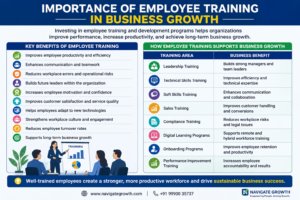
Companies across industries are investing in employee training and development programs to improve workforce performance, productivity, and long-term business growth. Businesses in Delhi, Gurugram, Noida, Bangalore, and Hyderabad are increasingly focusing on employee learning to stay competitive in modern markets.
Key Benefits of Employee Training and Development Programs
- Improves employee productivity and efficiency
- Enhances communication and teamwork
- Reduces workplace errors and operational risks
- Builds future leaders within the organization
- Increases employee motivation and confidence
- Improves customer satisfaction and service quality
- Helps employees adapt to new technologies
- Strengthens workplace culture and engagement
- Reduces employee turnover rates
- Supports long-term business growth
How Employee Training Supports Business Growth
| Training Area | Business Benefit |
|---|---|
| Leadership Training | Builds strong managers and team leaders |
| Technical Skills Training | Improves efficiency and technical expertise |
| Soft Skills Training | Enhances communication and collaboration |
| Sales Training | Improves customer handling and conversions |
| Compliance Training | Reduces workplace risks and legal issues |
| Digital Learning Programs | Supports remote and hybrid workforce training |
| Onboarding Programs | Improves employee retention and productivity |
| Performance Improvement Training | Increases employee accountability and results |
Modern organizations are also adopting online and hybrid learning methods to make employee training and development programs more flexible and accessible. Professional training providers like Navigate Growth help businesses create customized learning solutions that improve employee performance and organizational success.
Conclusion
In today’s competitive business landscape, organizations must continuously invest in employee growth to remain successful. Companies across Delhi, Gurugram, Noida, Bangalore, Hyderabad, and Lucknow are increasingly adopting employee training and development programs to improve productivity, leadership, communication, and overall workplace performance.
From technical upskilling and leadership development to soft skills enhancement and digital learning, professional workforce development helps organizations prepare employees for future challenges. Businesses that invest in employee learning create stronger teams, improve workplace culture, and achieve sustainable growth.
Continuous learning not only improves employee confidence and retention but also strengthens customer relationships and operational efficiency. As industries continue evolving, organizations must prioritize innovative and customized training strategies to remain competitive in changing markets.
With industry-focused learning solutions, Navigate Growth helps businesses across India build highly skilled and future-ready workforces through effective employee training and development programs tailored to organizational goals.
FAQs
1. What are employee training and development programs?
Employee training and development programs are structured learning initiatives designed to improve employee skills, productivity, communication, and leadership capabilities.
2. Why are employee training and development programs important?
These programs help organizations improve efficiency, employee retention, customer satisfaction, and long-term business growth.
3. Which industries benefit most from employee training programs?
Industries such as IT, manufacturing, healthcare, retail, logistics, finance, and customer service benefit greatly from workforce learning initiatives.
4. How do employee training programs improve productivity?
Training helps employees develop better technical knowledge, communication skills, and problem-solving abilities, leading to improved workplace performance.
5. Are online employee training programs effective?
Yes, online learning solutions provide flexible and cost-effective training opportunities for remote and hybrid employees.
6. How often should companies conduct employee training?
Most organizations conduct training quarterly, biannually, or annually depending on industry requirements and employee development goals.
7. What is the role of leadership training in organizations?
Leadership training improves communication, decision-making, team management, and employee engagement skills.
8. Why is soft skills training important?
Soft skills training improves teamwork, emotional intelligence, communication, and workplace collaboration.
9. How can businesses measure training ROI?
Organizations can measure ROI through productivity improvements, employee retention, customer satisfaction, and operational efficiency.
10. How does Navigate Growth help companies with employee training?
Navigate Growth provides customized employee training and development programs for organizations across Delhi, Gurugram, Noida, Bangalore, Hyderabad, and Lucknow to improve workforce performance and business growth.
📞 Contact Us
Looking to implement effective leadership training programs for managers ? Reach out to our team for customized solutions.
📍 Address:
Vivek Khand, Gomti Nagar, Lucknow, India
📧 Email:
📱 Phone:
- +91 99569 98880
- +91 94100 66699
🌐 Website:
https://navigategrowth.in/
Instagram: https://www.instagram.com/thegrowthmindset.official/