
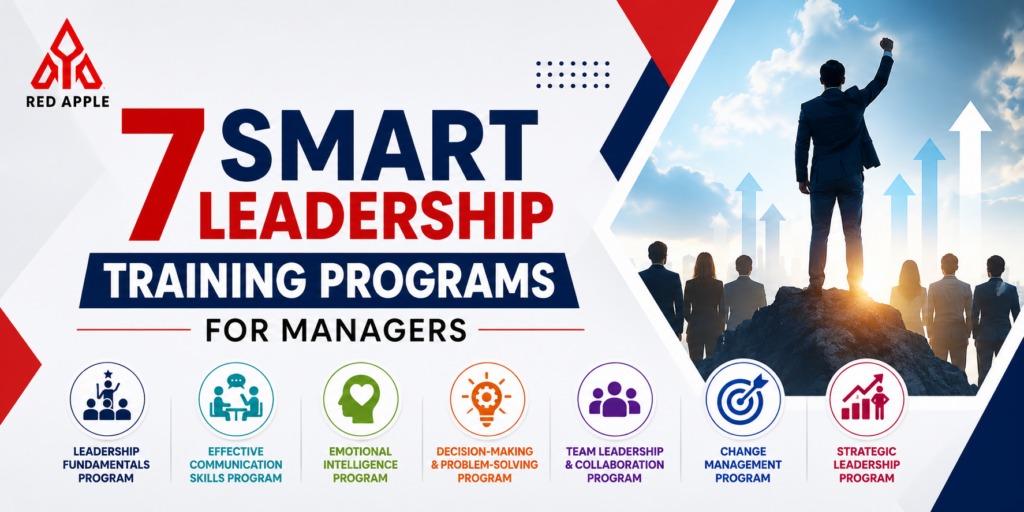
7 Smart Leadership Training Programs for Managers
Discover 7 smart leadership training programs for managers to improve team performance, communication, and workplace leadership in 2026.
Introduction
Leadership is changing rapidly in today’s modern workplace. Companies no longer want managers who only supervise teams. Instead, businesses need leaders who can inspire employees, solve problems quickly, and adapt to constant workplace changes. Because of this shift, organizations are investing heavily in leadership training programs for managers.
In 2026, smart companies are focusing on practical leadership development instead of outdated classroom-only learning. Managers must now handle remote teams, employee engagement, workplace stress, and digital transformation. Therefore, leadership training has become an essential investment for business growth.
The best leadership training programs for managers help professionals improve communication, decision-making, conflict resolution, emotional intelligence, and productivity. Additionally, these programs create future-ready leaders who can guide organizations through challenges and opportunities.
This guide explores seven smart leadership training trends and strategies that are transforming modern workplaces in 2026.
Why Leadership Training Matters in 2026
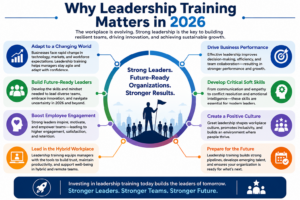
The workplace environment is evolving faster than ever before. As technology advances and employee expectations change, managers must learn new leadership techniques to stay effective.
Today’s workforce values collaboration, flexibility, transparency, and continuous learning. Because of this, businesses cannot rely on traditional leadership methods anymore.
Leadership training programs for managers help organizations:
- Improve employee performance
- Increase workplace productivity
- Build stronger teams
- Reduce employee turnover
- Improve communication
- Develop future leaders
- Support business growth
According to workplace learning reports, companies that invest in manager development often experience higher employee satisfaction and stronger team engagement. Furthermore, employees are more likely to stay in organizations that provide leadership growth opportunities.
7 Smart Leadership Training Programs for Managers
1. AI-Powered Leadership Training
Artificial intelligence is transforming corporate learning in 2026. Modern leadership training programs for managers now use AI-powered platforms to personalize learning experiences.
These systems analyze employee behavior, strengths, and learning patterns to recommend customized leadership lessons.
Benefits of AI-Based Leadership Training
- Personalized learning paths
- Faster skill development
- Real-time performance feedback
- Better engagement rates
- Flexible learning schedules
Managers can now access training modules, leadership simulations, and performance analytics directly from mobile devices.
Example
Many organizations use AI chat assistants and virtual coaching tools to help managers practice communication and conflict resolution skills.
2. Emotional Intelligence Leadership Training
Emotional intelligence has become one of the most important leadership skills in modern organizations.
Managers who understand emotions can build stronger relationships with employees, improve teamwork, and reduce workplace conflicts.
As a result, emotional intelligence training is now a major part of leadership training programs for managers.
Key Skills Covered
- Self-awareness
- Empathy
- Active listening
- Stress management
- Team motivation
- Workplace communication
Why It Matters
Employees prefer leaders who understand their concerns and support their growth. Therefore, emotionally intelligent managers often create more productive and positive work environments.
3. Microlearning Leadership Programs
Managers are busier than ever. Long training sessions often reduce engagement and learning retention.
Because of this, companies are shifting toward microlearning leadership programs.
Microlearning delivers short lessons that managers can complete within minutes.
Advantages of Microlearning
- Saves time
- Improves learning retention
- Easy mobile access
- Higher completion rates
- Flexible learning schedules
Leadership training programs for managers now include short video lessons, quick quizzes, podcasts, and interactive exercises.
Popular Microlearning Topics
- Team communication
- Decision-making
- Time management
- Employee feedback
- Problem-solving
4. Hybrid Leadership Development Training
Hybrid work environments continue to grow in 2026. Many companies now operate with both remote and in-office employees.
As a result, managers need specialized leadership skills to manage hybrid teams effectively.
Modern leadership training programs for managers teach leaders how to maintain productivity, communication, and team culture in flexible workplaces.
Important Training Areas
- Remote team communication
- Virtual meeting management
- Digital collaboration tools
- Employee engagement strategies
- Hybrid workplace productivity
Benefits for Businesses
Hybrid leadership training helps companies improve teamwork and maintain strong employee relationships regardless of work location.
5. Leadership Coaching and Mentorship Programs
Personalized coaching is becoming more popular in corporate learning.
Instead of relying only on general workshops, companies now provide one-on-one mentorship and executive coaching.
These leadership training programs for managers focus on personal growth and real workplace challenges.
Coaching Benefits
- Individual performance improvement
- Better decision-making
- Stronger confidence
- Goal-focused leadership development
- Faster career growth
Why Companies Prefer Coaching
Personalized coaching helps managers apply leadership skills directly to their daily responsibilities.
6. Gamified Leadership Training
Gamification is making corporate learning more engaging and interactive.
Many organizations now use rewards, simulations, challenges, and leaderboards in leadership training programs for managers.
Benefits of Gamification
- Increased participation
- Better engagement
- Improved motivation
- Faster learning
- Practical skill application
Common Gamified Activities
- Leadership simulations
- Team-building challenges
- Scenario-based learning
- Interactive quizzes
- Virtual problem-solving tasks
Managers often learn more effectively when training feels interactive and enjoyable.
7. Data-Driven Leadership Development
Modern businesses use data to improve leadership performance and employee development.
Leadership training programs for managers now include performance tracking, learning analytics, and skill assessments.
How Data Improves Leadership Training
- Measures employee progress
- Identifies skill gaps
- Tracks training effectiveness
- Supports better decision-making
- Improves ROI measurement
Business Impact
Companies can make smarter training investments by analyzing employee performance data and learning outcomes.
Key Benefits of Leadership Training Programs for Managers
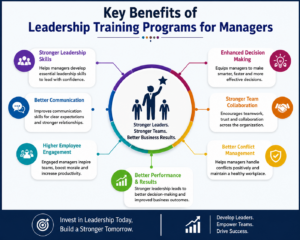
Strong leadership development programs offer significant benefits for both employees and organizations.
Improved Employee Performance
Managers who receive proper leadership training can guide employees more effectively. Consequently, teams often achieve higher productivity levels.
Better Communication
Communication is essential in every workplace. Leadership training programs for managers help leaders communicate clearly, resolve misunderstandings, and build trust.
Increased Employee Engagement
Employees perform better when managers support and motivate them. Therefore, leadership training helps organizations improve workplace engagement.
Higher Employee Retention
Workers are more likely to stay in organizations with supportive leadership. As a result, businesses can reduce turnover costs.
Stronger Decision-Making Skills
Leadership training helps managers analyze situations carefully and make smarter business decisions.
Future-Ready Workforce
Companies that invest in leadership development prepare their teams for future business challenges.
Common Challenges in Leadership Training
Although leadership development offers many advantages, businesses still face several challenges.
Limited Training Budgets
Some organizations struggle to invest in advanced leadership development programs.
Low Employee Engagement
Traditional training methods can sometimes feel repetitive or boring.
Time Constraints
Managers often have limited time for long training sessions.
Difficulty Measuring ROI
Many businesses find it challenging to measure the direct impact of leadership training.
Resistance to Change
Some employees and managers may resist new leadership strategies or technologies.
How to Choose the Right Leadership Training Programs for Managers
Choosing the right training program is essential for long-term success.
Identify Business Goals
First, companies should determine what leadership skills they want managers to improve.
Focus on Practical Learning
The best leadership training programs for managers include real-world exercises and practical scenarios.
Choose Flexible Learning Methods
Modern managers prefer mobile learning, virtual training, and hybrid learning options.
Evaluate Customization Options
Customized training programs often provide better results because they address company-specific challenges.
Measure Training Effectiveness
Businesses should track employee progress and leadership improvements regularly.
Future Trends in Leadership Training Beyond 2026
Corporate learning will continue evolving in the coming years.
Several future trends are expected to shape leadership development:
Immersive Virtual Reality Training
Virtual reality simulations will help managers practice leadership skills in realistic environments.
Adaptive Learning Systems
AI-based platforms will automatically adjust training based on individual learning performance.
Continuous Learning Culture
Organizations will increasingly support year-round learning instead of occasional training workshops.
Mobile-First Leadership Learning
More companies will deliver leadership training through smartphones and mobile apps.
Predictive Leadership Analytics
Businesses will use data analytics to predict future leadership needs and skill gaps.
Best Practices for Successful Leadership Development
Companies can improve leadership training results by following these strategies:
- Set clear leadership goals
- Encourage continuous learning
- Provide regular employee feedback
- Use interactive learning tools
- Offer mentorship opportunities
- Track performance improvements
- Promote collaboration and communication
These practices help businesses create stronger and more effective leaders.
Real-World Examples of Leadership Training Success
Many organizations have improved employee performance, communication, and productivity through leadership training programs for managers. Companies in technology, healthcare, retail, and manufacturing use modern leadership development strategies to build stronger teams, improve decision-making, increase employee engagement, and achieve long-term business growth in competitive workplaces.
Many global organizations are already seeing positive results from modern leadership development strategies.
Technology Companies
Technology companies use AI-powered leadership training platforms to help managers improve communication and team collaboration. These organizations often experience faster employee development and stronger productivity.
Healthcare Industry
Hospitals and healthcare organizations invest in leadership training programs for managers to improve decision-making and patient care coordination.
Retail Businesses
Retail companies focus on customer service leadership training to help managers improve employee motivation and workplace performance.
Manufacturing Companies
Manufacturing businesses use leadership coaching and safety management programs to improve operational efficiency.
These examples show how leadership development can improve business performance across different industries.
Essential Leadership Skills Managers Need in 2026
Modern managers need more than technical knowledge to succeed.
Leadership training programs for managers now focus on developing practical workplace skills that support long-term business growth.
Communication Skills
Strong communication helps managers explain goals clearly, solve workplace misunderstandings, and build trust with employees.
Critical Thinking
Managers must analyze problems quickly and make smart business decisions under pressure.
Adaptability
Workplaces are changing rapidly because of digital transformation and hybrid work models. Therefore, adaptability is essential for modern leadership.
Team Management
Successful managers know how to motivate employees, manage conflicts, and improve collaboration.
Time Management
Leadership training helps managers prioritize responsibilities and improve productivity.
Strategic Thinking
Businesses need leaders who can plan for future growth and handle market challenges effectively.
How Leadership Training Improves Workplace Culture
A strong workplace culture increases employee satisfaction and business success.
Leadership training programs for managers play a major role in building healthy workplace environments.
Encourages Employee Engagement
Managers who understand leadership strategies can create supportive and motivating work environments.
Improves Team Collaboration
Training programs teach managers how to improve communication and teamwork across departments.
Builds Employee Trust
Employees trust leaders who communicate openly and support professional development.
Supports Diversity and Inclusion
Modern leadership development often includes diversity training and inclusive leadership practices.
Reduces Workplace Stress
Emotionally intelligent managers can recognize employee concerns and create positive workplace experiences.
Signs Your Company Needs Leadership Training Programs for Managers
Many organizations wait too long before investing in leadership development.
Here are common signs that indicate a business may need leadership training:
- High employee turnover
- Poor team communication
- Low employee motivation
- Increased workplace conflicts
- Weak decision-making
- Lack of productivity
- Poor employee engagement
- Difficulty managing remote teams
If businesses ignore these issues, workplace performance can decline significantly.
Leadership Training Methods Used in 2026
Corporate learning strategies are evolving rapidly.
Organizations now use multiple learning formats to improve leadership development.
Online Learning Platforms
Managers can complete training programs anytime through mobile apps and learning platforms.
Instructor-Led Workshops
Live training sessions still remain valuable for group discussions and team activities.
Virtual Reality Simulations
Some companies now use VR simulations to teach managers how to handle workplace challenges.
Interactive Webinars
Webinars allow managers to learn from leadership experts worldwide.
Peer-to-Peer Learning
Collaborative learning sessions help managers share ideas and leadership experiences.
Measuring the Success of Leadership Training Programs
Businesses should regularly evaluate the effectiveness of leadership development programs.
Employee Performance Metrics
Companies can measure productivity improvements after training completion.
Employee Engagement Scores
Higher engagement levels often indicate successful leadership development.
Team Productivity
Managers who complete leadership training frequently improve overall team performance.
Retention Rates
Organizations can monitor whether leadership improvements reduce employee turnover.
Feedback Surveys
Employee feedback helps businesses understand whether managers apply leadership skills effectively.
Mistakes Companies Should Avoid in Leadership Training
Some businesses fail to achieve strong results because of poor training strategies.
Using Outdated Training Methods
Traditional lecture-only training often reduces employee engagement.
Ignoring Employee Feedback
Businesses should regularly collect feedback to improve training effectiveness.
Lack of Practical Learning
Managers learn better through real-world scenarios and interactive activities.
One-Time Training Programs
Leadership development should be continuous instead of occasional.
No Performance Tracking
Without tracking progress, businesses cannot measure training success.
Why Leadership Training Is a Smart Investment
Leadership development is no longer optional for modern businesses.
Organizations that invest in leadership training programs for managers often achieve:
- Better workplace productivity
- Higher employee satisfaction
- Improved team collaboration
- Stronger business growth
- Better communication
- Reduced employee turnover
- Future-ready leadership teams
Companies that fail to develop leaders may struggle with employee retention and workplace performance.
Conclusion
Modern workplaces require smart, adaptable, and emotionally intelligent leaders. Therefore, businesses must invest in leadership training programs for managers to remain competitive in 2026 and beyond.
From AI-powered learning and microlearning to emotional intelligence and hybrid leadership development, organizations now have more opportunities than ever to improve leadership performance.
Companies that prioritize leadership development can improve productivity, strengthen workplace culture, increase employee engagement, and build future-ready teams.
If your organization wants long-term growth and stronger leadership performance, investing in modern leadership training programs for managers is one of the smartest decisions you can make.
Frequently Asked Questions
What are leadership training programs for managers?
Leadership training programs for managers are professional development programs designed to improve communication, decision-making, team management, and leadership skills.
Why are leadership training programs important in 2026?
These programs help managers adapt to hybrid work environments, digital transformation, employee engagement challenges, and changing workplace expectations.
What skills do managers learn in leadership training programs?
Managers learn communication, emotional intelligence, problem-solving, team leadership, decision-making, and employee management skills.
Why are leadership training programs for managers important for business growth in 2026?
Leadership training programs for managers are important because modern workplaces require leaders who can manage teams effectively, improve communication, and adapt to rapid business changes. In 2026, companies are focusing more on employee engagement, hybrid work management, and digital transformation. Therefore, leadership development helps businesses improve productivity, reduce employee turnover, and build future-ready teams.
What skills can managers develop through leadership training programs?
Managers can improve several essential workplace skills through leadership training programs, including communication, emotional intelligence, decision-making, conflict resolution, time management, strategic thinking, and employee motivation. These skills help managers lead teams more effectively and create stronger workplace relationships.
How do leadership training programs for managers improve employee performance?
Leadership training programs help managers understand how to motivate employees, provide constructive feedback, and create positive work environments. As a result, employees often become more engaged, productive, and satisfied in their roles. Strong leadership also improves teamwork and workplace collaboration.
What are the latest trends in leadership training programs for managers in 2026?
The latest trends include AI-powered learning platforms, hybrid leadership development, emotional intelligence training, virtual reality simulations, mobile learning, microlearning programs, and personalized coaching. These modern learning methods make leadership training more flexible, interactive, and effective.
 Address:
 Email:
 Phone:
 Website: