
9 Employee Training and Development Programs for Success
Employee success is no longer driven only by experience or qualifications. In today’s fast-changing business environment, organizations must continuously invest in employee training and development programs to keep their workforce competitive, productive, and future-ready. Whether a company wants to improve employee performance, reduce turnover, strengthen leadership, or adapt to new technologies, the right learning initiatives can make a measurable difference.
Modern businesses recognize that learning is not a one-time activity but an ongoing process. Companies that prioritize employee training and development programs create a culture of continuous improvement where employees gain new skills, stay engaged, and contribute more effectively to organizational goals. From onboarding new hires to preparing future leaders, every training initiative plays a vital role in business growth.
This guide explores the first four employee training and development programs that every organization should consider. These programs help build strong foundations, enhance technical expertise, improve communication, and prepare employees for long-term success.
• What Are Employee Training and Development Programs?
Employee training and development programs are structured learning initiatives designed to improve employees’ knowledge, skills, abilities, and overall job performance. While training focuses on helping employees perform their current roles effectively, development prepares them for future responsibilities, leadership opportunities, and career advancement.
Organizations invest in these programs to close skill gaps, increase productivity, improve employee engagement, and maintain a competitive advantage. Effective workplace learning also supports innovation, customer satisfaction, and long-term business growth.
Training vs. Development
| Training | Development |
|---|---|
| Focuses on current job responsibilities | Prepares employees for future roles |
| Short-term learning objectives | Long-term career growth |
| Improves technical and functional skills | Builds leadership and strategic thinking |
| Usually role-specific | Broader organizational and career-focused |
Both approaches work together to create a highly skilled workforce capable of adapting to changing business requirements.
Key Objectives
- Improve employee productivity.
- Develop technical and soft skills.
- Prepare future leaders.
- Increase employee engagement.
- Support business growth and innovation.
- Strengthen organizational performance.
• Why Employee Training and Development Programs Matter
Today’s workplace is evolving faster than ever due to digital transformation, artificial intelligence, automation, and changing customer expectations. Businesses that fail to upskill their employees often struggle to remain competitive.
Implementing employee training and development programs helps organizations respond to these changes while ensuring employees possess the skills needed to perform at their best. Continuous learning also creates a positive work environment where employees feel valued and motivated to contribute.
Major Reasons Organizations Invest in Training
| Benefit | Business Impact |
|---|---|
| Higher productivity | Employees complete tasks more efficiently. |
| Better employee retention | Reduces hiring and replacement costs. |
| Increased engagement | Employees feel valued and motivated. |
| Improved innovation | Encourages creative thinking and problem-solving. |
| Stronger leadership pipeline | Develops future managers internally. |
| Better customer experience | Employees provide higher-quality service. |
How Training Supports Business Success
Organizations that regularly conduct employee training and development programs experience better collaboration, improved communication, and greater adaptability during periods of change. Employees become more confident in their roles and are more willing to accept new responsibilities.
Learning initiatives also encourage knowledge sharing between teams, leading to stronger collaboration and faster problem-solving. Businesses benefit from improved efficiency, reduced operational errors, and higher customer satisfaction.
• Benefits of Employee Training and Development Programs
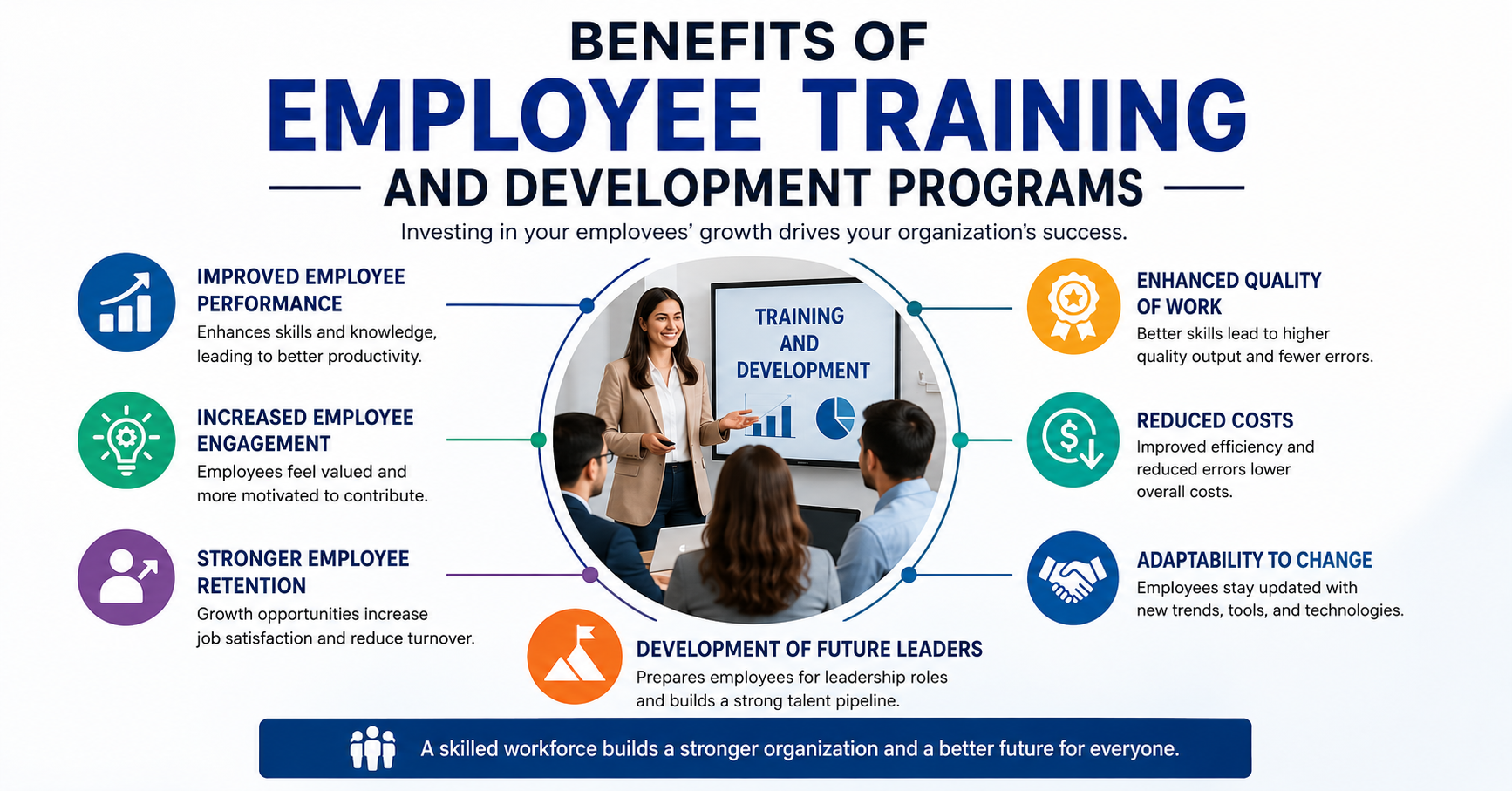
Investing in employee training and development programs provides measurable advantages for both employees and employers. Rather than viewing training as an expense, successful organizations treat it as a strategic investment that generates long-term returns.
Increased Productivity
Employees who receive regular training understand their responsibilities better and perform tasks more efficiently. They require less supervision, make fewer mistakes, and contribute to improved operational performance.
Higher Employee Engagement
Professional development opportunities demonstrate that an organization values its workforce. Employees who see opportunities for learning and career growth tend to be more committed and motivated.
Better Employee Retention
Career development is one of the strongest reasons employees remain with an organization. Offering continuous learning opportunities reduces turnover and helps retain top talent.
Stronger Leadership Pipeline
Leadership development programs prepare employees for future management roles, reducing the need for expensive external hiring while ensuring business continuity.
Improved Customer Satisfaction
Employees with better communication, product knowledge, and problem-solving skills deliver higher-quality customer experiences, resulting in stronger customer loyalty.
Better Adaptability
Modern organizations frequently adopt new technologies and processes. Continuous learning enables employees to adapt quickly without disrupting productivity.
Benefits at a Glance
| Employee Benefits | Employer Benefits |
|---|---|
| Career growth | Increased productivity |
| Better confidence | Lower turnover |
| New technical skills | Higher profitability |
| Improved communication | Better innovation |
| Professional development | Strong organizational culture |
When organizations consistently invest in employee training and development programs, they create a workforce capable of handling future challenges while maintaining high performance standards.
• Onboarding and Orientation Training
Onboarding and orientation are among the most essential employee training and development programs because they shape a new employee’s first impression of the organization. A structured onboarding process helps employees understand company values, workplace expectations, organizational policies, and job responsibilities from day one.
Effective onboarding goes beyond paperwork. It introduces employees to company culture, team members, communication channels, performance expectations, and available resources. Employees who experience a well-planned onboarding process become productive more quickly and feel more connected to the organization.
Objectives of Onboarding Training
- Introduce company culture and mission.
- Explain organizational policies.
- Clarify job roles and expectations.
- Familiarize employees with workplace tools.
- Build confidence during the initial weeks.
- Encourage collaboration with team members.
Typical Onboarding Activities
| Activity | Purpose |
|---|---|
| Company introduction | Understand mission and vision |
| HR orientation | Learn policies and benefits |
| Team introductions | Build workplace relationships |
| Technology setup | Access software and systems |
| Job-specific training | Learn role responsibilities |
| Performance expectations | Understand goals and KPIs |
Best Practices
- Create a structured onboarding schedule.
- Assign mentors or buddies.
- Provide interactive learning materials.
- Encourage regular feedback sessions.
- Monitor employee progress during the first 90 days.
Organizations that begin their learning journey with strong onboarding establish the foundation for successful employee training and development programs, leading to higher employee satisfaction, faster productivity, and improved long-term retention.
• How to Choose the Right Training Program
Selecting the right employee training and development programs is essential for improving workforce performance and achieving business goals. Every organization has different objectives, challenges, and skill requirements, so there is no one-size-fits-all training solution. A successful program should address current skill gaps while preparing employees for future responsibilities.
Before implementing any workplace learning initiative, organizations should evaluate employee performance, business priorities, and long-term growth strategies. Choosing the right training program ensures employees receive relevant knowledge that directly contributes to higher productivity, stronger engagement, and improved organizational performance.
Factors to Consider Before Choosing a Training Program
- Identify current skill gaps within the workforce.
- Align training objectives with business goals.
- Understand employee learning needs.
- Choose experienced trainers or learning partners.
- Decide between online, classroom, or blended learning.
- Allocate a realistic training budget.
- Define measurable learning outcomes.
- Plan continuous learning instead of one-time sessions.
Choosing the Right Program Based on Business Needs
| Business Need | Recommended Training Program |
|---|---|
| Faster onboarding | Onboarding and Orientation Training |
| Future leadership | Leadership Development Programs |
| Digital transformation | Technical Skills Training |
| Better communication | Soft Skills Development |
| Legal compliance | Compliance and Workplace Safety Training |
| Higher sales | Sales and Customer Service Training |
| Inclusive workplace | Diversity, Equity, and Inclusion (DEI) Training |
| Better managers | Manager and Supervisor Development |
| AI adoption | Digital and AI Skills Training |
Questions Every Organization Should Ask
Before investing in employee training and development programs, decision-makers should answer a few important questions.
- What skills are employees currently lacking?
- Which departments require immediate improvement?
- What business objectives should training support?
- How will success be measured?
- What learning format suits employees best?
- How frequently should training be conducted?
Answering these questions helps organizations avoid unnecessary expenses while maximizing learning outcomes.
Tips for Selecting an Effective Training Provider
- Review industry experience.
- Check trainer qualifications.
- Request client testimonials and case studies.
- Evaluate course customization options.
- Ensure post-training support is available.
- Look for measurable assessment methods.
A carefully selected training program increases employee confidence, improves productivity, and ensures that organizational learning investments generate long-term business value.
• Common Mistakes to Avoid
Even well-designed employee training and development programs may fail if organizations overlook planning, implementation, or follow-up. Many businesses invest significant resources in training but fail to achieve expected results because of avoidable mistakes.
Recognizing these common challenges helps organizations improve learning effectiveness and maximize return on investment.
Most Common Training Mistakes
• Providing the Same Training to Everyone
Different employees have different responsibilities and skill levels. Delivering identical training to every employee often reduces relevance and engagement.
Better Approach:
- Customize learning based on departments.
- Personalize content according to employee roles.
- Offer advanced and beginner learning paths.
• Ignoring Skill Gap Analysis
Many organizations introduce training without identifying actual performance gaps.
Better Approach:
- Conduct employee assessments.
- Review performance reports.
- Consult managers before designing programs.
• Treating Training as a One-Time Event
Learning should continue throughout an employee’s career rather than ending after a single workshop.
Better Approach:
- Schedule refresher sessions.
- Encourage continuous workplace learning.
- Introduce monthly learning activities.
• Focusing Only on Technical Skills
Technical knowledge alone is insufficient for long-term success. Communication, teamwork, leadership, and emotional intelligence are equally important.
Better Approach:
Balance technical training with soft skills and leadership development.
• No Follow-Up After Training
Organizations often complete training without monitoring employee progress.
Better Approach:
- Conduct post-training assessments.
- Schedule coaching sessions.
- Measure behavioure improvements.
• Ignoring Employee Feedback
Employees provide valuable insights into training quality and effectiveness.
Better Approach:
- Conduct anonymous surveys.
- Encourage open discussions.
- Continuously improve training content.
Common Mistakes vs Best Practices
| Common Mistake | Best Practice |
|---|---|
| One-size-fits-all training | Personalized learning paths |
| No skill gap analysis | Assess employee needs first |
| No follow-up | Continuous coaching |
| Outdated training content | Regularly update materials |
| Ignoring feedback | Collect employee suggestions |
| No success measurement | Define KPIs before training |
Avoiding these mistakes ensures that employee training and development programs remain engaging, relevant, and aligned with business objectives.
• How to Measure Training Success
Implementing employee training and development programs is only the first step. Organizations must also measure whether employees have actually learned new skills and whether those skills improve business performance.
Measuring training success helps organizations understand which programs deliver value and which require improvement. It also allows HR professionals and business leaders to justify learning investments through measurable results.
Key Metrics to Measure Training Success
• Employee Performance
Compare employee performance before and after training to identify measurable improvements.
Examples include:
- Faster task completion
- Better work quality
- Fewer operational errors
- Increased productivity
• Knowledge Assessments
Conduct quizzes, practical exercises, certification tests, or skill demonstrations to evaluate employee learning.
• Employee Feedback
Ask employees about:
- Training quality
- Trainer effectiveness
- Course relevance
- Learning experience
- Confidence after training
• Manager Observations
Managers can evaluate whether employees apply newly learned skills in daily work by monitoring behaviour, communication, and overall performance.
• Business Performance Indicators
Training should ultimately improve business results.
Examples include:
- Higher customer satisfaction
- Increased sales
- Reduced workplace accidents
- Lower employee turnover
- Improved project completion rates
- Better customer retention
Key Performance Indicators (KPIs)
| KPI | What It Measures |
|---|---|
| Employee productivity | Work efficiency |
| Skill improvement | Learning outcomes |
| Customer satisfaction | Service quality |
| Employee retention | Workforce stability |
| Sales growth | Revenue improvement |
| Training completion rate | Employee participation |
| Assessment scores | Knowledge gained |
| Return on Investment (ROI) | Financial impact of training |
Continuous Improvement Strategies
Organizations should continuously evaluate and improve their employee training and development programs by:
- Reviewing employee feedback regularly.
- Updating learning content.
- Monitoring changing business needs.
- Using learning analytics.
- Providing refresher training.
- Encouraging self-paced learning.
- Recognizing employee achievements.
• Future Trends in Employee Training and Development Programs
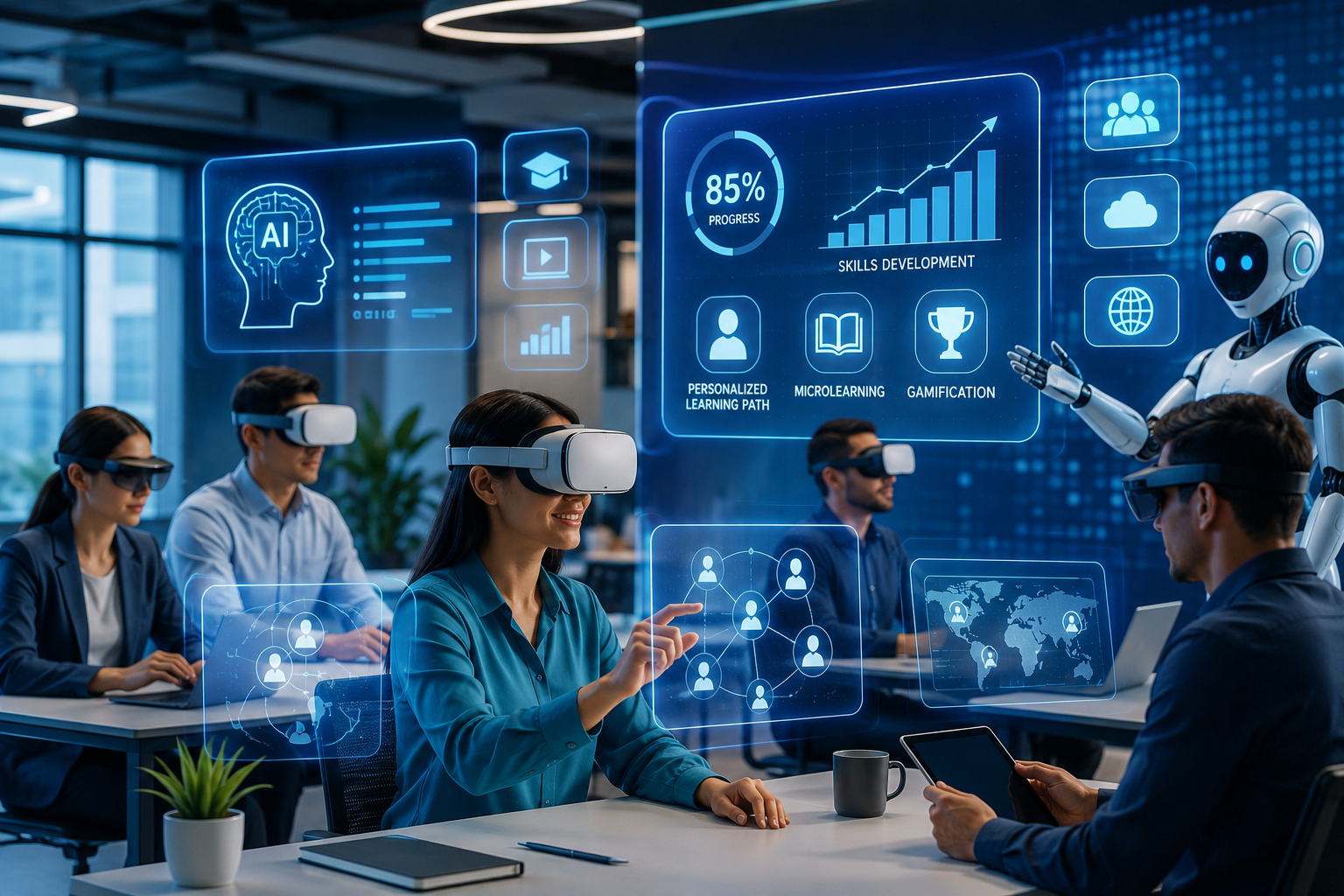
The future of workplace learning is changing rapidly due to technological advancements, changing employee expectations, and evolving business requirements. Organizations can no longer depend on traditional training methods alone. They need flexible, personalized, and technology-driven learning solutions to prepare employees for future challenges.
Modern employee training and development programs are moving toward continuous learning, skill-based development, and digital platforms. Companies are focusing on building adaptable employees who can quickly learn new technologies, improve performance, and contribute to long-term business success.
Understanding future trends helps HR professionals, business leaders, and L&D teams design effective training strategies that support employee growth and organizational goals.
• AI-Powered Learning and Personalized Training
Artificial intelligence is transforming the way employees learn. AI-based learning platforms analyze employee performance, identify skill gaps, and recommend customized learning paths based on individual needs.
Instead of providing the same training content to everyone, organizations can now deliver personalized learning experiences that match employee roles, career goals, and existing skill levels.
Benefits of AI-Based Training
- Personalized course recommendations.
- Faster identification of skill gaps.
- Automated learning assessments.
- AI-powered virtual assistants.
- Better learning engagement.
AI will continue to become an important part of employee training and development programs as businesses look for smarter ways to improve workforce capabilities.
• Microlearning for Faster Skill Development
Microlearning is becoming increasingly popular because employees prefer short, focused learning sessions that fit into their busy schedules. Instead of completing lengthy training courses, employees can learn through small modules, videos, quizzes, and interactive content.
Microlearning improves knowledge retention because employees can immediately apply what they learn in their daily work.
Examples of Microlearning
- Five-minute skill videos.
- Quick knowledge quizzes.
- Short leadership lessons.
- Product update sessions.
- Daily learning activities.
This approach makes workplace learning more convenient and increases employee participation.
• Virtual and Hybrid Learning Models
Remote and hybrid work environments have changed how organizations deliver training. Companies are adopting virtual instructor-led training, online courses, webinars, and digital collaboration tools to provide learning opportunities from anywhere.
Hybrid learning combines online resources with practical sessions, giving employees flexibility while maintaining interaction and engagement.
Advantages of Hybrid Learning
| Advantage | Impact |
|---|---|
| Flexible access | Employees learn at their convenience |
| Lower training costs | Reduces travel and infrastructure expenses |
| Wider reach | Supports distributed teams |
| Better engagement | Combines digital and human interaction |
• Skills-Based Learning and Upskilling
Businesses are increasingly focusing on skills rather than only job positions. As technology changes, employees need continuous upskilling and reskilling to remain productive.
Future-focused employee training and development programs will prioritize digital skills, leadership abilities, communication, problem-solving, and industry-specific expertise.
Organizations that invest in employee skill development create a workforce capable of adapting to market changes.
• Frequently Asked Questions
What are employee training and development programs?
Employee training and development programs are structured learning initiatives designed to improve employee skills, knowledge, performance, and career growth. These programs help organizations enhance productivity, employee engagement, and overall business performance.
Why are employee training and development programs important?
These programs help employees improve their skills, adapt to new technologies, increase confidence, and perform their responsibilities more effectively. For organizations, training improves productivity, reduces employee turnover, strengthens leadership capabilities, and supports long-term growth.
What are the main types of employee training programs?
Common training programs include:
- Onboarding and orientation training.
- Leadership development programs.
- Technical skills training.
- Soft skills development.
- Compliance training.
- Sales and customer service training.
- Digital and AI skills training.
- Manager development programs.
Each program focuses on specific employee and business requirements.
How often should companies conduct employee training?
Training should not be limited to annual sessions. Organizations should provide continuous learning opportunities through workshops, online courses, coaching, and skill development activities.
Regular training helps employees stay updated with industry changes and improves long-term performance.
How can companies measure training effectiveness?
Companies can measure training success through:
- Employee performance improvements.
- Skill assessments.
- Employee feedback.
- Productivity changes.
- Customer satisfaction scores.
- Employee retention rates.
- Return on training investment.
Measuring results helps organizations improve their future learning strategies.
What are the latest trends in employee training?
The latest trends include:
- AI-powered personalized learning.
- Microlearning.
- Virtual and hybrid training.
- Skills-based development.
- Gamification.
- Learning analytics.
- Digital workplace learning platforms.
These trends help organizations create flexible and effective learning experiences.
• Conclusion
In today’s competitive business environment, investing in employee training and development programs is essential for building a skilled, motivated, and adaptable workforce. Organizations that prioritize continuous learning can improve employee performance, strengthen leadership capabilities, and prepare their teams for future challenges.
From onboarding and leadership development to technical skills training, soft skills development, and digital learning, every training initiative contributes to creating a stronger workplace culture. Effective training does not only improve individual performance but also supports innovation, productivity, and business growth.
The future of learning will focus on personalized experiences, artificial intelligence, continuous upskilling, and flexible learning methods. Companies that adopt these trends will be better positioned to attract talent, retain employees, and maintain a competitive advantage.
Successful organizations understand that employees are their most valuable asset. By implementing strategic employee training and development programs, businesses can create a workforce that is confident, capable, and prepared for long-term success.
Continuous learning is not just a training activity; it is a powerful investment in the future of both employees and organizations.
Contact Navigate Growth
Navigate Growth
Address: Vivek Khand, Gomti Nagar, Lucknow, India
Phone:
📞 +91 99569 98880
📞 +91 94100 66699
Email:
✉️ contact@navigategrowth.in
✉️ niharikagangwar@navigategrowth.in
Website:
🌐 https://navigategrowth.in/
Instagram:
📷 https://www.instagram.com/thegrowthmindset.official/
Connect with Navigate Growth for professional employee training and development programs, leadership development programs, and corporate training solutions designed to improve workforce skills and business performance.