
Introduction
In today’s competitive job market, technical knowledge alone is no longer enough to secure long-term career success. Employers now seek candidates who possess a combination of technical expertise, communication abilities, digital literacy, adaptability, and problem-solving skills. This growing demand has made employment training and development programs an essential part of workforce preparation across industries. Whether someone is entering the job market for the first time, changing careers, or upgrading existing skills, structured training programs help bridge the gap between education and employment.
Employment training and development programs are designed to equip individuals with practical knowledge, industry-specific skills, and workplace competencies that increase employability. These programs are offered by government agencies, private training institutes, universities, corporations, and online learning platforms. Their primary objective is to prepare participants for current and future job opportunities while helping organizations build a highly skilled workforce.
As industries continue to adopt technologies such as artificial intelligence, automation, cloud computing, and data analytics, the skills required by employers are evolving rapidly. According to workforce experts, continuous learning has become essential for maintaining career growth and remaining competitive in the employment market. This is where employment training and development programs play a crucial role by promoting lifelong learning and professional development.
Modern workforce development focuses not only on technical education but also on soft skills, leadership, teamwork, critical thinking, customer service, and digital competencies. Organizations increasingly invest in workforce development programs, career development programs, professional skills training, job readiness training, and skill development initiatives to ensure individuals are prepared for changing workplace demands.
Another major advantage of these programs is their flexibility. Today, learners can access classroom-based instruction, virtual workshops, blended learning, certification courses, apprenticeships, internships, and self-paced online modules. This flexibility allows students, job seekers, and working professionals to learn according to their schedules while gaining industry-recognized certifications.
For employers, investing in employment training and development programs leads to improved productivity, reduced recruitment costs, higher employee retention, and stronger organizational performance. For individuals, these programs open doors to better career opportunities, increased confidence, and long-term employability.
What Are Employment Training and Development Programs?
Employment training and development programs are structured learning initiatives designed to prepare individuals for employment by developing the technical, professional, and interpersonal skills required in today’s workplace. Unlike traditional education, which primarily focuses on academic knowledge, these programs emphasize practical application, industry relevance, and job readiness.
The primary goal of these programs is to ensure that learners possess the competencies employers actively seek. They cover a broad range of learning areas, including technical skills, digital literacy, communication, leadership, project management, workplace ethics, customer service, and industry-specific knowledge.
These programs are commonly delivered through:
- Government-sponsored workforce development initiatives
- Corporate training academies
- Vocational and technical institutions
- Universities and colleges
- Professional certification providers
- Online learning platforms
- Apprenticeship and internship programs
Depending on career goals, participants can choose short-term certification courses, diploma programs, skill development workshops, or comprehensive professional development pathways.
Core Components of Employment Training and Development Programs
| Component | Purpose |
|---|---|
| Technical Skills Training | Builds job-specific expertise |
| Soft Skills Development | Improves communication, teamwork, and leadership |
| Digital Skills Training | Enhances computer and technology proficiency |
| Career Development | Supports long-term professional growth |
| Workplace Readiness | Prepares learners for real-world work environments |
| Industry Certifications | Validates professional competencies |
Successful employment training and development programs combine theoretical learning with practical experience. Learners participate in simulations, projects, internships, case studies, and hands-on exercises that prepare them for actual workplace challenges.
These programs continuously evolve to meet industry demands. Emerging fields such as cybersecurity, cloud computing, artificial intelligence, renewable energy, healthcare technology, and digital marketing have significantly increased demand for specialized training programs.
Ultimately, employment training and development programs help reduce skill gaps while creating a workforce capable of adapting to technological innovation and changing business environments.
Why Employment Training and Development Programs Matter
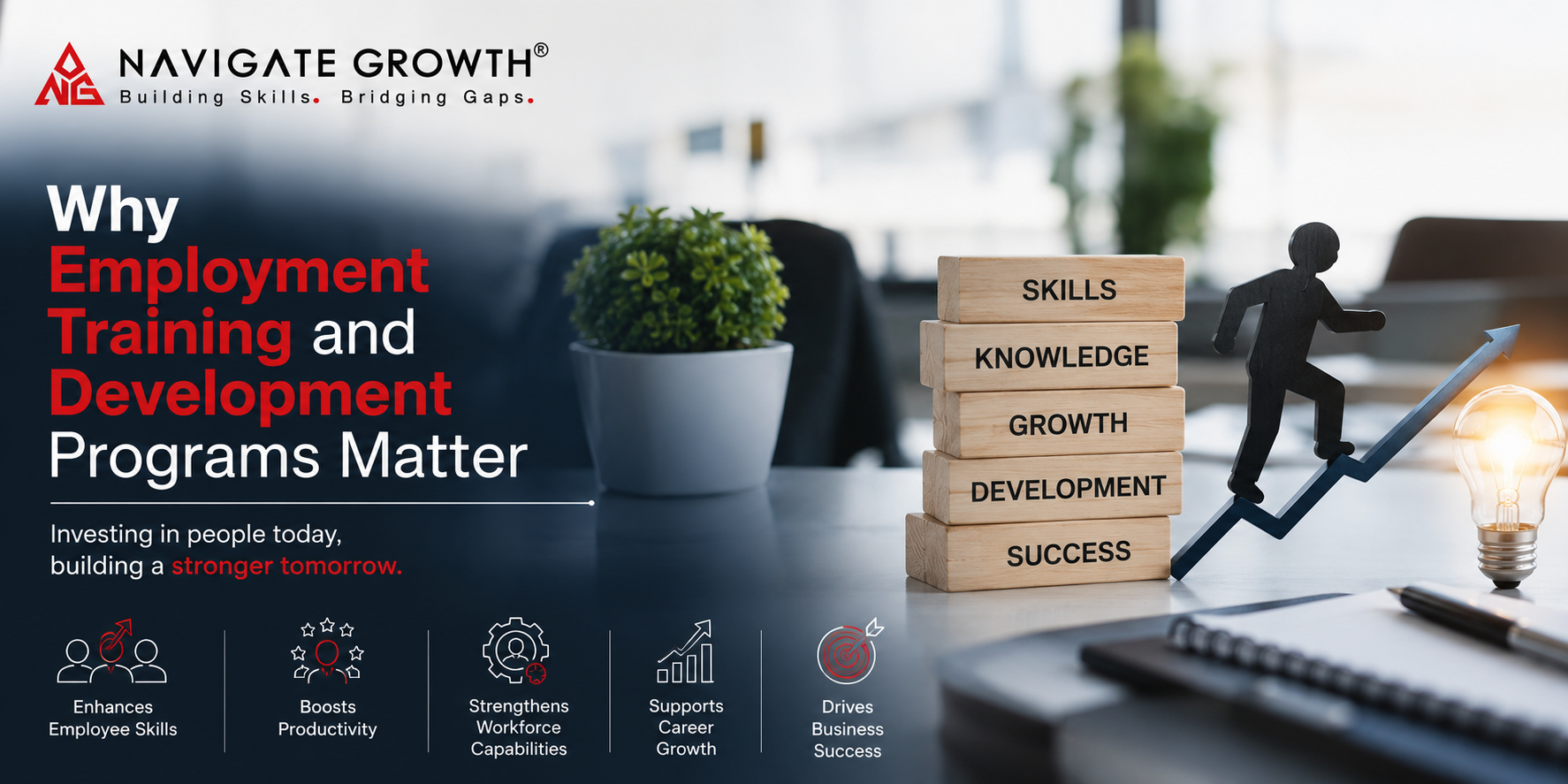
The global employment landscape is changing faster than ever before. Rapid technological advancement, automation, digital transformation, and evolving customer expectations have created new skill requirements across every industry. As a result, employment training and development programs have become essential for maintaining workforce competitiveness.
One of the biggest challenges employers face today is the growing skills gap. Many job seekers possess academic qualifications but lack practical workplace experience. Employment training and development programs bridge this gap by teaching industry-relevant skills that can be applied immediately on the job.
These programs also improve workforce adaptability. Employees who continuously learn new technologies and professional skills are better equipped to handle organizational change, new software, updated business processes, and evolving customer expectations.
For employers, investing in workforce development programs leads to numerous business benefits:
- Higher productivity
- Faster onboarding
- Reduced hiring costs
- Improved employee engagement
- Better innovation
- Stronger leadership pipeline
- Increased employee retention
From an individual’s perspective, continuous learning increases confidence, improves career mobility, and enhances long-term employability. Professionals who regularly upgrade their skills are more likely to secure promotions, transition into leadership roles, and remain competitive throughout their careers.
Additionally, governments worldwide support employment training and development programs because they contribute to economic growth by reducing unemployment, increasing workforce participation, and strengthening national productivity.
Key Benefits of Employment Training and Development Programs
Implementing effective employment training and development programs creates value for both individuals and organizations. These programs extend far beyond acquiring technical knowledge—they foster career growth, improve organizational performance, and encourage continuous learning.
1. Improves Employability
Job seekers gain practical skills that employers actively seek, making them stronger candidates during recruitment.
2. Bridges Skill Gaps
Training helps individuals acquire current industry knowledge and reduces the mismatch between education and workplace requirements.
3. Enhances Career Growth
Professional certifications and continuous learning increase opportunities for promotions, salary growth, and career advancement.
4. Boosts Workplace Productivity
Employees who receive proper professional skills training perform tasks more efficiently, produce higher-quality work, and require less supervision.
5. Develops Leadership Skills
Leadership development modules prepare professionals for supervisory and management positions by strengthening decision-making, communication, and strategic thinking.
6. Encourages Continuous Learning
Modern careers require lifelong learning. Regular participation in employment training and development programs keeps professionals updated with emerging technologies and industry trends.
7. Increases Employee Confidence
Well-trained professionals feel more confident handling responsibilities, solving problems, and collaborating with teams.
8. Supports Organizational Growth
Organizations with strong workforce development programs experience better innovation, higher employee satisfaction, and improved business performance.
Summary of Key Benefits
| Benefit | Impact |
|---|---|
| Better Employability | Higher chances of securing quality jobs |
| Career Advancement | Promotions and salary growth |
| Skill Enhancement | Industry-relevant competencies |
| Leadership Development | Strong future managers |
| Productivity Improvement | Greater workplace efficiency |
| Digital Readiness | Adaptation to new technologies |
| Workforce Competitiveness | Long-term career sustainability |
In an increasingly competitive economy, employment training and development programs have become a strategic investment rather than an optional activity. They prepare individuals for meaningful careers while enabling organizations to build skilled, adaptable, and future-ready workforces. By embracing continuous learning, both employees and employers can thrive in an ever-evolving professional landscape.
7 Dynamic Employment Training and Development Programs
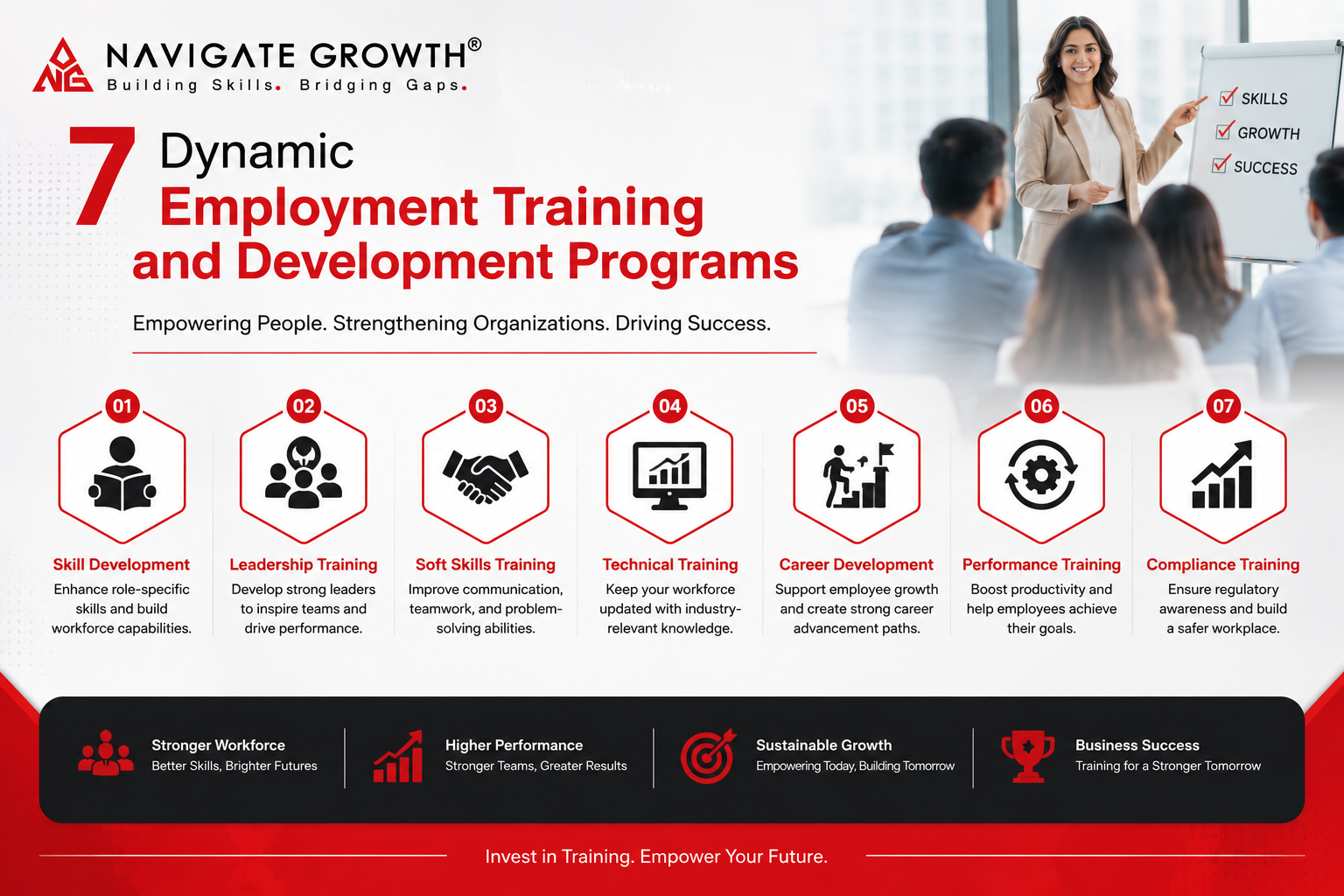
Choosing the right employment training and development programs depends on career goals, industry requirements, and the skills employers value most. While some programs focus on technical expertise, others strengthen communication, leadership, or entrepreneurial abilities. The most successful professionals often combine multiple training methods to build a balanced skill set that supports long-term career growth.
Below are seven dynamic employment training and development programs that help individuals become job-ready, enhance professional capabilities, and remain competitive in today’s rapidly changing employment market.
1. Technical Skills Training Programs
Technical skills training is one of the most important employment training and development programs because it equips learners with the practical knowledge required to perform specific job roles. Every industry—from manufacturing and healthcare to finance and information technology—requires employees with specialized technical competencies.
These programs are designed to teach industry-specific tools, software, equipment, and processes. Participants gain hands-on experience through practical assignments, workshops, simulations, and real-world projects, making them more confident and productive from their first day on the job.
Popular technical training areas include:
- Software development
- Data analytics
- Cybersecurity
- Cloud computing
- Healthcare technologies
- Engineering tools
- Accounting software
- Graphic design
- Manufacturing operations
- Digital marketing
Many employers now prefer candidates with professional certifications because they demonstrate verified expertise and commitment to continuous learning. Technical training also helps working professionals upgrade their skills as technologies evolve, ensuring long-term employability and career progression.
2. Soft Skills Development Programs
While technical expertise is essential, employers increasingly value professionals who can communicate effectively, collaborate with teams, solve problems, and adapt to workplace challenges. This is why soft skills development has become a core component of modern employment training and development programs.
Soft skills influence how employees interact with colleagues, customers, and managers. Strong interpersonal abilities often determine career advancement as much as technical knowledge.
Common soft skills covered include:
- Communication skills
- Team collaboration
- Emotional intelligence
- Leadership
- Critical thinking
- Time management
- Conflict resolution
- Customer service
- Adaptability
- Professional ethics
Organizations often integrate role-playing exercises, group discussions, presentations, and case studies into training sessions to improve these abilities.
Benefits of Soft Skills Training
| Skill | Workplace Benefit |
|---|---|
| Communication | Better teamwork and client relationships |
| Leadership | Improved decision-making and team guidance |
| Problem Solving | Faster issue resolution |
| Adaptability | Easier adjustment to organizational change |
| Time Management | Higher productivity |
Employees with strong soft skills build better workplace relationships, contribute positively to organizational culture, and are more likely to take on leadership responsibilities.
3. Apprenticeship and Internship Programs
Among the most practical employment training and development programs, apprenticeships and internships provide learners with real-world workplace experience. Instead of learning only through classroom instruction, participants work alongside experienced professionals while applying their knowledge in actual business environments.
Internships are typically short-term opportunities offered to students or recent graduates, whereas apprenticeships combine structured education with paid on-the-job training over an extended period.
These programs help learners:
- Gain industry exposure
- Understand workplace expectations
- Develop professional confidence
- Build technical competencies
- Network with experienced professionals
- Improve employability
Employers also benefit because they can evaluate potential future employees before offering permanent positions.
Industries that frequently offer apprenticeship and internship opportunities include:
- Information Technology
- Healthcare
- Hospitality
- Construction
- Manufacturing
- Banking
- Retail
- Marketing
- Engineering
Many successful careers begin through internship experiences that later transition into full-time employment. These employment training and development programs create a smoother pathway from education to professional careers by reducing the gap between theoretical learning and practical application.
4. Digital Skills and IT Certification Programs
Digital transformation has reshaped almost every industry, making digital literacy one of the most valuable workplace competencies. Consequently, digital skills training has become an essential part of employment training and development programs for professionals at every career stage.
Today’s employers expect candidates to possess at least a basic understanding of digital tools, productivity software, cloud platforms, cybersecurity practices, and online collaboration technologies. Advanced roles may require expertise in artificial intelligence, machine learning, programming, cloud infrastructure, or data science.
Popular digital training areas include:
- Microsoft Office and Google Workspace
- Data Analytics
- Artificial Intelligence
- Machine Learning
- Cloud Computing
- Cybersecurity
- Web Development
- Digital Marketing
- Search Engine Optimization (SEO)
- Project Management Tools
Professional certifications from recognized providers further strengthen a candidate’s resume and improve credibility during recruitment.
Advantages of Digital Skills Training
| Training Area | Career Advantage |
|---|---|
| Cloud Computing | High-demand technology roles |
| Cybersecurity | Better job security |
| Data Analytics | Improved decision-making skills |
| AI & Automation | Future-ready career opportunities |
| Digital Marketing | Strong online business expertise |
Digital learning platforms also make these employment training and development programs highly accessible. Learners can complete self-paced courses, attend live virtual classes, or earn globally recognized certifications without geographical limitations.
As businesses continue adopting automation and advanced technologies, professionals with updated digital competencies will remain highly competitive in the global job market. Investing in digital skills today prepares individuals for tomorrow’s workplace and significantly increases long-term career opportunities.
These four programs form the foundation of effective employment training and development programs, helping individuals develop technical expertise, workplace behavior, hands-on experience, and digital capabilities that employers actively seek. In the next section, we’ll explore Leadership and Career Development Programs, Industry-Specific Workforce Training Programs, and Entrepreneurship and Self-Employment Training Programs, along with guidance on choosing the right program for your career goals.
How to Choose the Right Employment Training and Development Program
Choosing the right employment training and development programs depends on career goals, industry requirements, and skill needs. A good program should provide practical knowledge, industry-relevant skills, and certification value.
Before selecting a program, consider:
- Career objectives and future goals
- Industry demand and job opportunities
- Training format (online, offline, or blended)
- Practical projects and hands-on experience
- Certification and trainer expertise
The right program helps individuals improve employability and build a successful career.
Best Practices for Successful Training and Development
Successful employment training and development programs require proper planning and continuous improvement. Some effective practices include:
- Identifying skill gaps before training
- Using practical and interactive learning methods
- Providing regular feedback
- Encouraging continuous learning
- Measuring training outcomes
These practices improve learning results and help organizations develop a skilled workforce.
Common Challenges and How to Overcome Them
Training programs may face challenges such as:
- Low engagement: Use interactive activities and real examples.
- Limited resources: Use affordable online learning platforms.
- Changing industry needs: Regularly update training content.
- Difficulty measuring results: Track performance and feedback.
Addressing these challenges improves the effectiveness of employment training and development programs.
How to Measure the Success of Employment Training Programs
The success of training can be measured through:
- Skill improvement assessments
- Employee performance tracking
- Feedback surveys
- Certification achievements
- Productivity improvements
Measuring results helps organizations understand the impact of their training investments.
Future Trends in Employment Training and Development Programs
Future employment training and development programs will focus on technology-based learning and personalized development.
Key trends include:
- AI-powered learning platforms
- Virtual training experiences
- Microlearning courses
- Online skill development
- Upskilling and reskilling programs
These trends will help professionals stay competitive in the changing job market.
Frequently Asked Questions (FAQs)
1. What are employment training and development programs?
They are learning programs designed to improve skills, employability, and career growth.
2. Who can join these programs?
Students, job seekers, and working professionals can benefit from them.
3. Why are these programs important?
They help individuals develop relevant skills and prepare for workplace challenges.
4. What skills are included in these programs?
They include technical skills, soft skills, digital skills, and leadership abilities.
Conclusion
Employment training and development programs play an important role in building skilled professionals and improving career opportunities. By focusing on continuous learning, practical skills, and industry requirements, individuals can achieve long-term career success while organizations can develop a future-ready workforce.
From technical skills and digital training to leadership development and workplace readiness, effective training creates long-term value for both employees and organizations. By choosing the right program, following effective learning practices, and continuously upgrading skills, professionals can achieve sustainable career growth.
As industries continue to evolve, investing in continuous learning and development will remain one of the most powerful strategies for achieving success in the modern employment landscape.
Contact Navigate Growth
Navigate Growth
Address: Vivek Khand, Gomti Nagar, Lucknow, India
Phone:
📞 +91 99569 98880
📞 +91 94100 66699
Email:
✉️ contact@navigategrowth.in
✉️ niharikagangwar@navigategrowth.in
Website:
🌐 https://navigategrowth.in/
Instagram:
📷 https://www.instagram.com/thegrowthmindset.official/
Connect with Navigate Growth for professional employee training and development programs, leadership development programs, and corporate training solutions designed to improve workforce skills and business performance.