
7 Best Leadership Training Programs for Managers
Introduction
In today’s competitive business environment, organizations need leaders who can inspire teams, manage change, solve complex problems, and drive sustainable growth. While technical expertise is important, leadership capabilities are often what determine whether a manager can successfully guide a team toward achieving business goals. This is why leadership training programs for managers have become a critical investment for organizations worldwide.
Managers serve as the bridge between organizational strategy and daily execution. They influence employee engagement, productivity, workplace culture, and overall business performance. However, many professionals are promoted into management positions without receiving formal leadership training. As a result, they often struggle with communication, delegation, conflict resolution, decision-making, and employee development.
Modern leadership training programs for managers address these challenges by equipping leaders with practical skills, proven frameworks, and real-world strategies. These programs focus on developing both soft skills and strategic competencies that enable managers to lead effectively in rapidly changing work environments.
Whether you are a new manager, an experienced team leader, or a senior executive preparing for greater responsibilities, participating in structured leadership training programs for managers can significantly enhance your effectiveness and career growth.
Why Leadership Training Programs for Managers Are Important
Many organizations mistakenly assume that excellent employees automatically become excellent managers. While high-performing employees often possess strong technical skills, leadership requires an entirely different set of competencies.
Without proper development, managers may struggle to:
- Motivate employees
- Handle workplace conflicts
- Delegate responsibilities effectively
- Manage performance issues
- Lead organizational change
- Communicate expectations clearly
This is where leadership training programs for managers create measurable value.
The Growing Need for Leadership Development
Today’s managers face challenges that previous generations never encountered. They must lead hybrid teams, manage diverse workforces, adopt new technologies, and navigate constant change.
Leadership Challenges in Modern Organizations
| Challenge | Impact on Business | Leadership Solution |
|---|---|---|
| Remote Work | Reduced collaboration | Virtual leadership skills |
| Employee Turnover | Increased hiring costs | Better engagement strategies |
| Workplace Stress | Lower productivity | Emotional intelligence training |
| Rapid Change | Employee resistance | Change management skills |
| Skill Gaps | Reduced efficiency | Continuous learning culture |
| Diversity Challenges | Team conflicts | Inclusive leadership training |
Organizations increasingly recognize that leadership development is not an expense but a strategic investment.
Benefits of Leadership Training Programs for Managers
The advantages of investing in leadership training programs for managers extend beyond individual growth. These programs positively impact employees, teams, and overall organizational performance.
Improved Employee Engagement
Employees are more likely to remain committed when they trust and respect their leaders.
Managers who receive leadership training learn how to:
- Communicate effectively
- Recognize achievements
- Provide constructive feedback
- Foster collaboration
- Build trust
Engaged employees typically demonstrate:
- Higher productivity
- Better attendance
- Increased innovation
- Greater job satisfaction
Impact of Leadership on Employee Engagement
| Leadership Quality | Employee Response |
|---|---|
| Clear Communication | Increased trust |
| Regular Feedback | Improved performance |
| Recognition Programs | Higher motivation |
| Coaching Support | Better development |
| Inclusive Leadership | Stronger collaboration |
Better Team Performance
Strong leaders create high-performing teams.
One of the major objectives of leadership training programs for managers is teaching leaders how to maximize team potential.
Managers learn how to:
- Set clear goals
- Align team objectives
- Monitor progress
- Resolve obstacles
- Improve accountability
When leaders effectively manage teams, employees gain clarity regarding expectations and responsibilities.
Increased Employee Retention
Employee turnover remains a significant challenge for many organizations.
Research consistently shows that employees often leave managers rather than companies.
Leadership training helps managers:
- Build positive relationships
- Address employee concerns
- Create growth opportunities
- Foster supportive environments
Leadership Development and Retention
| Leadership Practice | Retention Impact |
|---|---|
| Career Development | High |
| Employee Recognition | High |
| Coaching Culture | Medium-High |
| Open Communication | High |
| Fair Management | Very High |
Organizations with strong leadership development initiatives frequently experience lower turnover rates and reduced recruitment costs.
Enhanced Organizational Culture
Workplace culture reflects leadership behaviors.
Managers influence:
- Team morale
- Workplace values
- Employee relationships
- Productivity standards
- Organizational reputation
Effective leadership training programs for managers help leaders cultivate positive cultures that encourage collaboration, innovation, and accountability.
Core Leadership Skills Every Manager Must Develop
The most successful leaders continuously strengthen their skills and competencies.
Communication Skills
Communication remains the foundation of effective leadership.
Managers spend a significant portion of their day communicating with employees, stakeholders, customers, and executives.
Essential Communication Skills
| Skill | Purpose |
|---|---|
| Active Listening | Understand employee concerns |
| Public Speaking | Deliver presentations |
| Feedback Delivery | Improve performance |
| Written Communication | Enhance clarity |
| Conflict Conversations | Resolve issues |
Leaders who communicate effectively reduce misunderstandings and strengthen team relationships.
Active Listening
Many managers focus on speaking rather than listening.
Active listening involves:
- Maintaining eye contact
- Asking questions
- Clarifying understanding
- Showing empathy
- Avoiding interruptions
This skill significantly improves employee trust and engagement.
Emotional Intelligence
Modern leadership training programs for managers place significant emphasis on emotional intelligence.
Emotional intelligence refers to the ability to understand and manage emotions while effectively interacting with others.
Components of Emotional Intelligence
| Component | Description |
|---|---|
| Self-Awareness | Understanding personal emotions |
| Self-Regulation | Managing reactions |
| Motivation | Maintaining focus on goals |
| Empathy | Understanding others |
| Social Skills | Building relationships |
Managers with high emotional intelligence often demonstrate:
- Better leadership effectiveness
- Stronger employee relationships
- Improved conflict management
- Greater resilience
Decision-Making Skills
Managers make numerous decisions every day.
Poor decisions can negatively impact productivity, morale, and profitability.
Leadership development programs help managers:
- Analyze information
- Assess risks
- Evaluate alternatives
- Make informed choices
Effective Decision-Making Process
| Step | Action |
|---|---|
| Define Problem | Identify issue |
| Gather Data | Collect information |
| Analyze Options | Compare solutions |
| Select Solution | Choose best option |
| Implement Action | Execute plan |
| Review Results | Evaluate outcome |
Strong decision-making enables managers to navigate uncertainty with confidence.
Strategic Thinking
Successful leaders focus on both immediate tasks and long-term objectives.
Strategic thinking allows managers to:
- Anticipate future challenges
- Identify opportunities
- Align team goals
- Support business growth
Many leadership training programs for managers include strategic planning modules designed to improve organizational leadership capabilities.
Characteristics of Strategic Leaders
- Forward-thinking
- Analytical
- Adaptable
- Innovative
- Goal-oriented
These qualities help managers contribute to organizational success beyond daily operations.
Delegation Skills
Many managers struggle with delegation because they fear losing control or believe they can perform tasks better themselves.
However, effective delegation is essential for leadership success.
Benefits of Delegation
| Benefit | Outcome |
|---|---|
| Time Savings | Increased productivity |
| Employee Growth | Skill development |
| Better Focus | Strategic leadership |
| Team Empowerment | Higher engagement |
| Reduced Stress | Improved efficiency |
Leadership development programs teach managers how to delegate effectively while maintaining accountability.
Common Leadership Challenges Managers Face
Even experienced leaders encounter obstacles that require continuous learning and development.
Managing Hybrid Teams
Hybrid work environments have introduced new leadership challenges.
Managers must:
- Maintain engagement
- Encourage communication
- Monitor productivity
- Build team culture
Hybrid Leadership Challenges
| Challenge | Leadership Response |
|---|---|
| Isolation | Frequent check-ins |
| Miscommunication | Clear expectations |
| Low Engagement | Virtual team activities |
| Trust Issues | Transparent leadership |
| Collaboration Gaps | Digital tools |
Leadership training helps managers adapt to evolving workplace dynamics.
Handling Workplace Conflict
Conflict is unavoidable in any organization.
Sources of conflict include:
- Personality differences
- Resource competition
- Communication issues
- Role ambiguity
- Workplace stress
Effective leaders learn how to:
- Identify root causes
- Facilitate discussions
- Encourage collaboration
- Develop solutions
Conflict resolution remains a critical component of successful leadership training programs for managers.
Leading Through Change
Organizations constantly experience change due to:
- Technology adoption
- Market conditions
- Organizational restructuring
- Business expansion
Employees often resist change because of uncertainty.
Managers who receive leadership development training learn how to:
- Communicate change effectively
- Address concerns
- Build support
- Maintain morale
Strong change leadership improves organizational adaptability and resilience.
Characteristics of High-Quality Leadership Training Programs for Managers
Not all leadership programs deliver meaningful results.
The best leadership training programs for managers share several important characteristics.
Practical Learning
Managers learn most effectively through application rather than theory.
Every leader has unique strengths and weaknesses.
Effective programs assess:
- Leadership style
- Communication ability
- Emotional intelligence
- Management skills
Based on assessment results, participants receive customized development plans that target specific improvement areas.
Continuous Learning Support
Leadership development should not end after a single workshop.
Top organizations provide:
- Coaching sessions
- Mentorship opportunities
- Refresher training
- Leadership communities
Continuous learning ensures long-term skill development and behavior change.
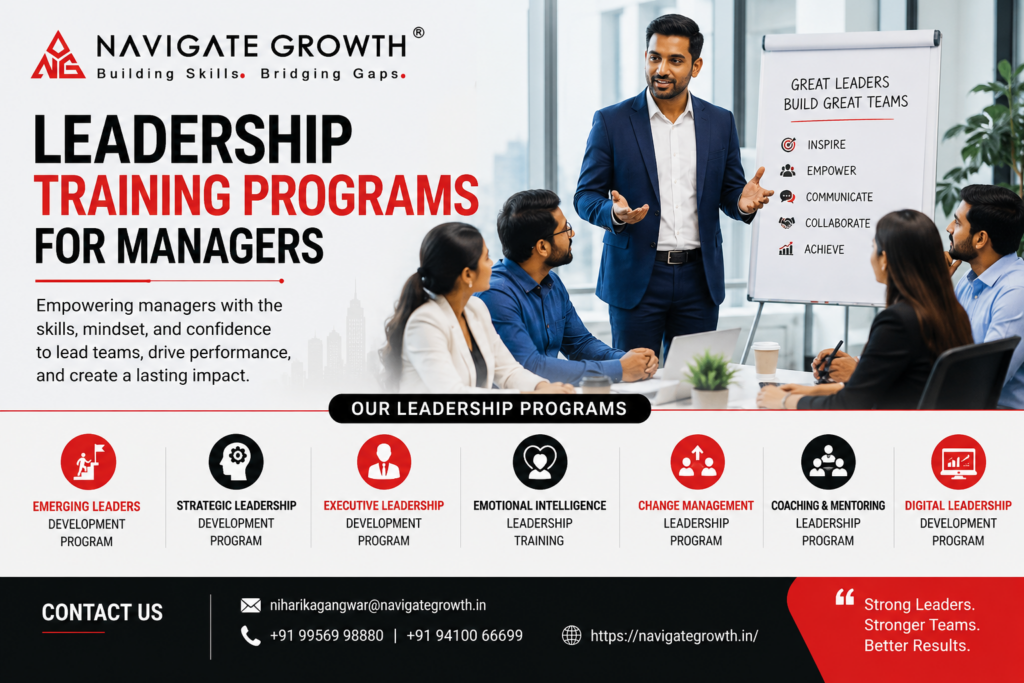
7 Best Leadership Training Programs for Managers
1. Emerging Leaders Development Program
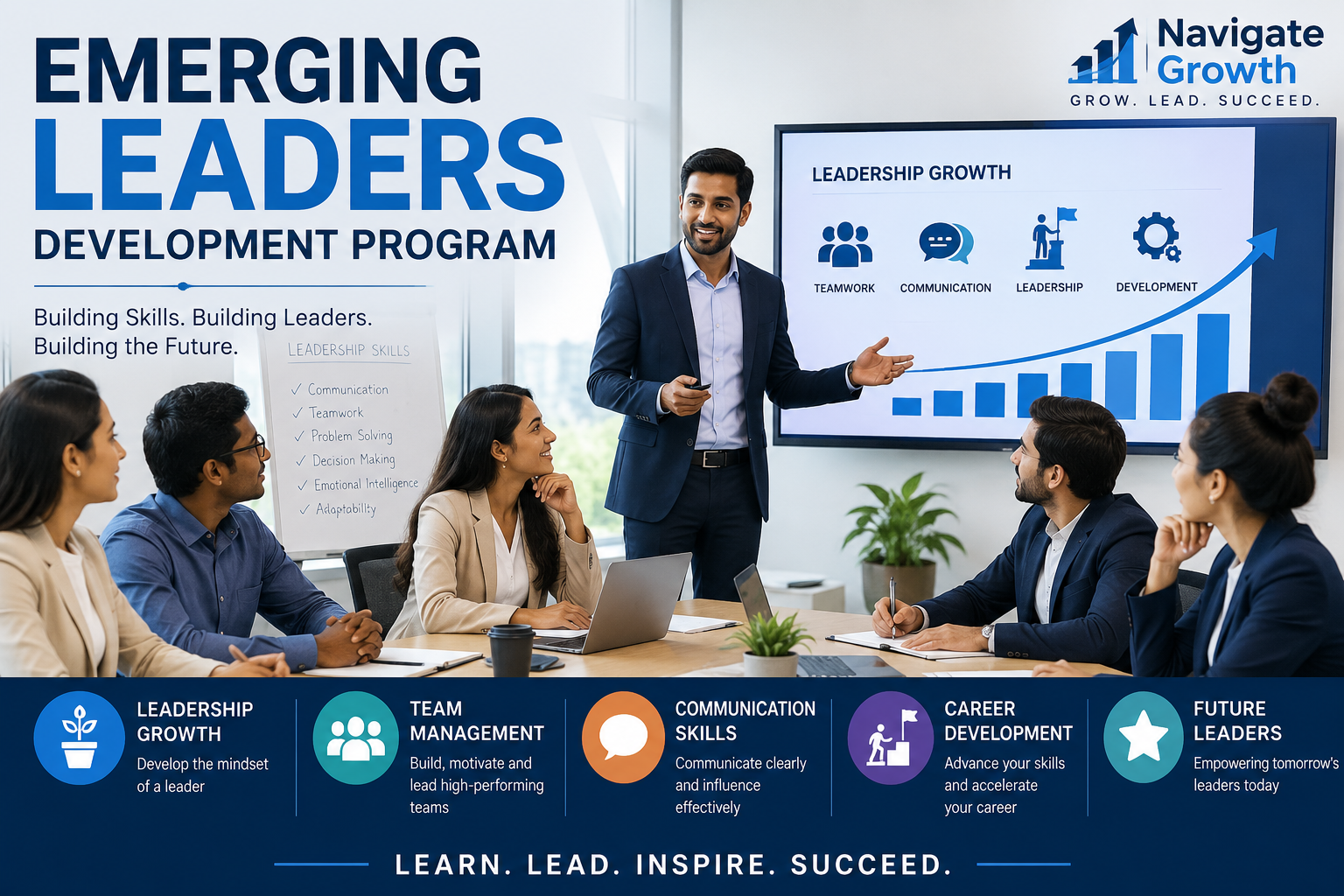
The Emerging Leaders Development Program is specifically designed for high-potential employees and newly promoted managers.
Many organizations struggle when transitioning top-performing employees into leadership roles. This program helps bridge that gap by providing foundational management and leadership skills.
Key Learning Areas
| Training Area | Skills Developed |
|---|---|
| Leadership Fundamentals | Leadership mindset |
| Communication | Team interaction |
| Delegation | Workload management |
| Feedback Skills | Employee development |
| Time Management | Productivity improvement |
Participants learn how to transition from individual contributors to successful leaders capable of guiding teams effectively.
2. Strategic Leadership Development Program
As managers progress in their careers, they must move beyond daily operations and develop a broader business perspective. The Strategic Leadership Development Program is designed to help leaders think strategically, align team goals with organizational objectives, and contribute to long-term business success.
Many managers spend most of their time solving immediate problems. While operational excellence is important, organizations also need leaders who can anticipate future challenges and identify growth opportunities.
Modern leadership training programs for managers increasingly emphasize strategic thinking because businesses operate in rapidly changing markets that require proactive leadership.
Key Learning Objectives
| Learning Area | Outcome |
|---|---|
| Strategic Planning | Long-term business focus |
| Market Analysis | Better decision-making |
| Risk Assessment | Improved preparedness |
| Business Growth Strategies | Organizational expansion |
| Innovation Management | Competitive advantage |
Benefits of Strategic Leadership Training
Managers who complete strategic leadership development programs often demonstrate:
- Better planning capabilities
- Stronger business acumen
- Improved resource allocation
- Enhanced decision-making
- Greater organizational impact
Strategic leaders understand how individual team performance contributes to broader organizational goals.
Core Topics Covered
Vision Development
Leaders must create and communicate a compelling vision that motivates employees.
Training helps managers:
- Define organizational direction
- Align teams around objectives
- Inspire employee commitment
- Create measurable goals
Strategic Problem-Solving
Managers learn frameworks for analyzing complex business challenges and developing effective solutions.
Business Acumen
Many leadership training programs for managers incorporate financial literacy and business fundamentals to help leaders make informed decisions.
3. Executive Leadership Development Program
Executive leadership programs prepare senior managers for higher-level leadership responsibilities.
Organizations often use these programs to build succession pipelines and prepare future executives.
Why Executive Leadership Matters
Executive leaders influence:
- Organizational strategy
- Company culture
- Business performance
- Stakeholder relationships
- Long-term growth
Executive Leadership Competencies
| Competency | Importance |
|---|---|
| Strategic Vision | High |
| Executive Communication | High |
| Organizational Influence | High |
| Change Leadership | High |
| Stakeholder Management | High |
Leadership Presence
Executive presence refers to the ability to inspire confidence, demonstrate credibility, and influence others.
Training programs help managers develop:
- Professional confidence
- Communication skills
- Decision-making abilities
- Leadership influence
Organizational Transformation
Senior leaders frequently guide organizations through major transformations.
These may include:
- Digital transformation
- Mergers and acquisitions
- Organizational restructuring
- Culture change initiatives
Executive-level leadership training programs for managers prepare participants to manage these complex situations successfully.
4. Emotional Intelligence Leadership Training
Emotional intelligence is widely recognized as one of the most important leadership competencies.
Managers with strong emotional intelligence build stronger relationships, resolve conflicts effectively, and create positive work environments.
What Is Emotional Intelligence?
Emotional intelligence refers to the ability to understand, manage, and influence emotions.
Emotional Intelligence Framework
| Component | Description |
|---|---|
| Self-Awareness | Understanding emotions |
| Self-Control | Managing reactions |
| Motivation | Maintaining focus |
| Empathy | Understanding others |
| Relationship Skills | Building connections |
Why Emotional Intelligence Matters
Leaders with high emotional intelligence often:
- Build stronger teams
- Improve employee engagement
- Reduce workplace conflict
- Increase trust
- Enhance collaboration
Developing Self-Awareness
Self-awareness helps managers understand how their actions affect others.
Training activities may include:
- Personality assessments
- Reflection exercises
- Feedback sessions
- Leadership evaluations
Building Empathy
Empathy enables leaders to understand employee perspectives.
Benefits include:
- Better communication
- Increased trust
- Improved teamwork
- Higher morale
Many successful leadership training programs for managers incorporate emotional intelligence assessments to help participants identify development opportunities.
5. Change Management Leadership Program
Change is inevitable in modern organizations.
Whether implementing new technology, restructuring teams, or entering new markets, organizations require leaders who can guide employees through transitions effectively.
Common Organizational Changes
| Type of Change | Example |
|---|---|
| Technological | New software systems |
| Structural | Team reorganization |
| Strategic | New business direction |
| Cultural | Workplace transformation |
| Operational | Process improvements |
Challenges During Change
Employees often experience:
- Uncertainty
- Anxiety
- Resistance
- Reduced productivity
- Lack of engagement
Leadership training helps managers address these challenges proactively.
Key Change Leadership Skills
Communication
Clear communication reduces confusion and builds confidence.
Managers learn how to:
- Explain change initiatives
- Address employee concerns
- Share updates
- Reinforce organizational goals
Stakeholder Management
Effective leaders understand the needs and concerns of various stakeholders.
Change Leadership Competencies
| Competency | Benefit |
|---|---|
| Communication | Greater clarity |
| Empathy | Employee trust |
| Adaptability | Faster transitions |
| Problem-Solving | Better solutions |
| Resilience | Stronger leadership |
Organizations that invest in leadership training programs for managers focused on change management often experience smoother transitions and higher employee acceptance.
6. Coaching and Mentoring Leadership Program
The most successful leaders develop other leaders.
Coaching and mentoring programs help managers maximize employee performance while supporting career growth.
Coaching vs Traditional Management
Traditional management often focuses on supervision and control.
Coaching focuses on:
- Employee development
- Continuous learning
- Problem-solving
- Performance improvement
Benefits of Coaching Leadership
| Benefit | Impact |
|---|---|
| Skill Development | Higher performance |
| Employee Confidence | Better engagement |
| Career Growth | Increased retention |
| Team Productivity | Improved results |
| Leadership Pipeline | Future leaders |
Effective Coaching Skills
Asking Powerful Questions
Managers learn how to guide employees toward solutions rather than simply providing answers.
Examples include:
- What challenges are you facing?
- What solutions have you considered?
- How can I support you?
Providing Constructive Feedback
Feedback should be:
- Specific
- Timely
- Balanced
- Actionable
Many leadership training programs for managers dedicate entire modules to feedback and coaching conversations.
Mentoring Future Leaders
Mentoring focuses on long-term development.
Mentors help employees:
- Build confidence
- Develop leadership skills
- Navigate career challenges
- Expand professional networks
Organizations that encourage coaching and mentoring often experience stronger talent retention and succession planning outcomes.
7. Digital Leadership Development Program
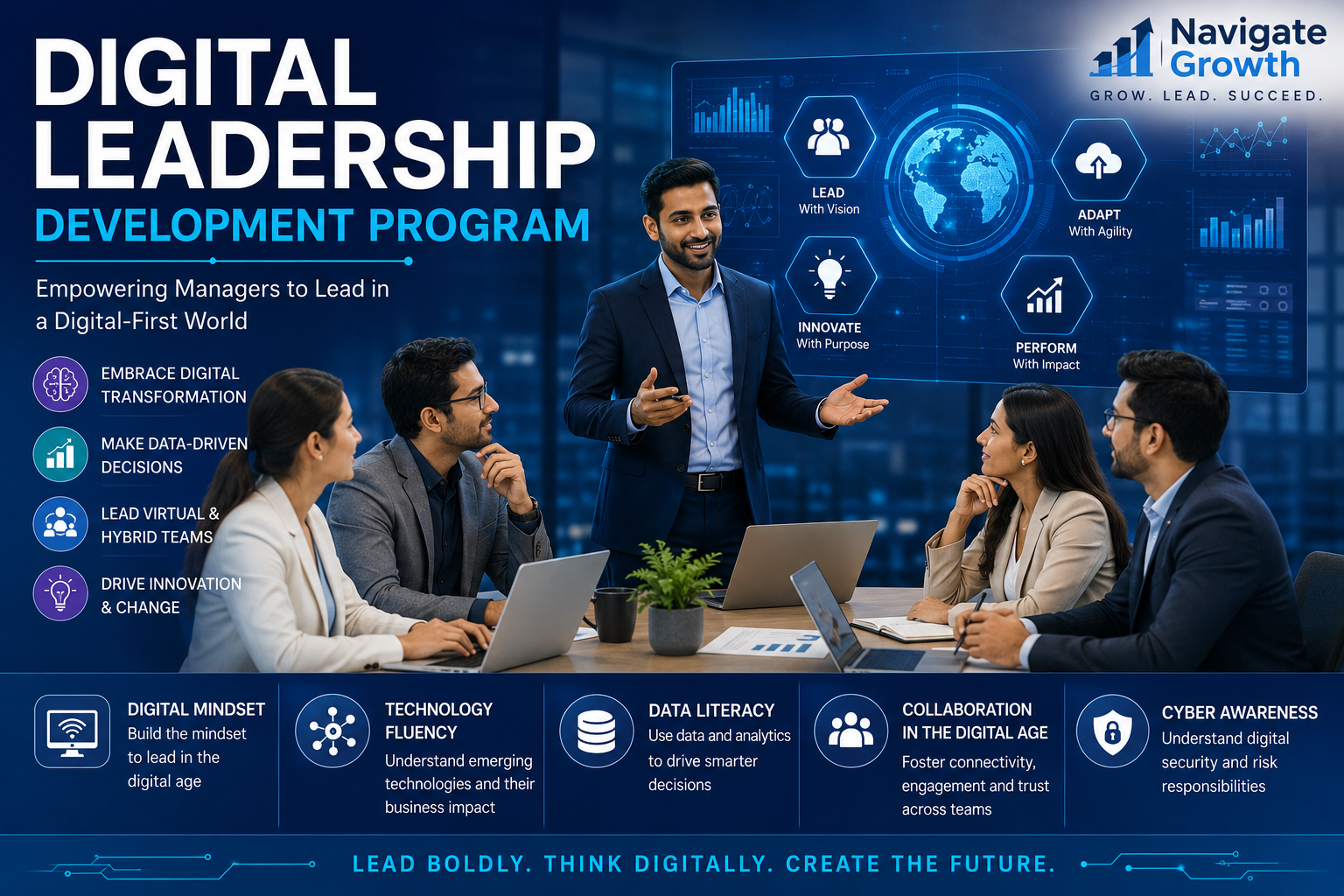
Technology continues to reshape business operations.
Managers must understand how to lead in digital environments while supporting innovation and transformation.
Why Digital Leadership Matters
Modern leaders must manage:
- Digital transformation
- Automation
- Artificial intelligence
- Data analytics
- Virtual collaboration
Digital Leadership Skills
| Skill | Purpose |
|---|---|
| Technology Awareness | Understand trends |
| Data Literacy | Make informed decisions |
| Innovation Leadership | Drive growth |
| Virtual Leadership | Manage remote teams |
| Digital Communication | Enhance collaboration |
Data-Driven Decision-Making
Managers increasingly rely on data to guide decisions.
Training programs teach leaders how to:
- Analyze information
- Interpret metrics
- Identify trends
- Improve performance
Innovation Leadership
Innovation is essential for organizational competitiveness.
Leaders learn how to:
- Encourage creativity
- Support experimentation
- Manage risk
- Foster continuous improvement
Digital-focused leadership training programs for managers help organizations remain competitive in rapidly evolving industries.
How to Implement Leadership Training Successfully
Investing in leadership development is only the first step.
Organizations must also implement training effectively to achieve meaningful results.
Assess Leadership Needs
Before selecting programs, organizations should identify skill gaps.
Leadership Assessment Areas
| Area | Evaluation Method |
|---|---|
| Communication | Surveys |
| Emotional Intelligence | Assessments |
| Team Management | Performance Reviews |
| Strategic Thinking | Leadership Evaluations |
| Coaching Skills | Employee Feedback |
Assessment results help organizations select appropriate development initiatives.
Set Clear Objectives
Leadership training should align with organizational goals.
Examples include:
- Improving employee engagement
- Reducing turnover
- Developing future leaders
- Increasing productivity
- Supporting organizational change
Clear objectives improve program effectiveness.
Encourage Continuous Learning
Leadership development should not be viewed as a one-time event.
Organizations should create learning cultures that encourage ongoing growth.
Continuous Learning Methods
| Method | Benefit |
|---|---|
| Coaching | Personalized support |
| Mentoring | Long-term growth |
| Workshops | Skill reinforcement |
| Online Learning | Flexibility |
| Peer Learning | Knowledge sharing |
Many successful leadership training programs for managers combine multiple learning approaches.
Conclusion
Investing in leadership training programs for managers is essential for building strong leaders, improving team performance, and driving long-term business success. From emerging leaders to senior executives, the right training programs help managers develop critical skills such as communication, emotional intelligence, strategic thinking, coaching, and change management. Organizations that prioritize leadership development create engaged employees, stronger workplace cultures, and future-ready leaders capable of navigating today’s evolving business landscape. By implementing effective leadership training initiatives, companies can achieve sustainable growth and maintain a competitive advantage.
Frequently Asked Questions
Who Should Attend Leadership Training Programs for Managers?
These programs benefit:
- New managers
- Team leaders
- Department heads
- Senior managers
- High-potential employees
How Long Do Leadership Development Programs Last?
Program duration varies significantly.
| Program Type | Typical Duration |
|---|---|
| Workshop | 1–3 Days |
| Certification Program | 4–12 Weeks |
| Executive Development | 3–12 Months |
| Continuous Leadership Academy | Ongoing |
Can Small Businesses Benefit from Leadership Training?
Absolutely.
Small businesses often experience substantial improvements in:
- Productivity
- Employee engagement
- Retention
- Team collaboration
through effective leadership training programs for managers.
 Contact Us
Looking to implement effective leadership training programs for managers ? Reach out to our team for customized solutions.
 Address:
Vivek Khand, Gomti Nagar, Lucknow, India
 Email:
 Phone:
- +91 99569 98880
- +91 94100 66699
 Website:
https://navigategrowth.in/
Instagram: https://www.instagram.com/thegrowthmindset.official/