10 Proven Employee Training and Development Programs Today
Introduction
In today’s competitive business environment, organizations can no longer depend solely on hiring talented employees. To stay ahead of competitors and adapt to changing market demands, businesses must continuously invest in their workforce. This is where Employee Training and Development Programs play a critical role.
As technology continues to evolve and workplace expectations shift, employees need regular opportunities to learn new skills, improve existing competencies, and prepare for future challenges. Companies that invest in Employee Training and Development Programs often experience higher productivity, stronger employee engagement, better retention rates, and improved overall business performance.
Benefits of Employee Training and Development Programs
Organizations that implement effective Employee Training and Development Programs gain significant advantages that contribute directly to business growth and employee success.
Increased Employee Productivity
Training equips employees with the skills and knowledge needed to perform their jobs more effectively. Well-trained employees can complete tasks faster, reduce errors, and deliver higher-quality work. This increased efficiency results in improved productivity across the organization.
Improved Employee Engagement
Employees are more engaged when they feel their employer is invested in their professional growth. Learning opportunities increase motivation, confidence, and job satisfaction. Engaged employees are often more committed to organizational goals and willing to contribute beyond their basic responsibilities.
Better Employee Retention
High employee turnover can be costly and disruptive. Employee Training and Development Programs help retain top talent by providing opportunities for career growth and advancement. Employees who see a future within the organization are less likely to seek opportunities elsewhere.
Enhanced Innovation
Continuous learning encourages employees to think creatively and embrace new ideas. Training exposes workers to emerging technologies, industry trends, and best practices that support innovation and problem-solving.
Stronger Leadership Pipeline
Leadership development programs prepare employees for management and executive roles. Organizations that invest in future leaders strengthen succession planning and ensure long-term stability.
Improved Customer Satisfaction
Employees who receive proper training are better equipped to understand customer needs, resolve issues efficiently, and provide exceptional service. Better customer experiences often lead to increased loyalty and revenue growth.
By investing in Employee Training and Development Programs, businesses create a workforce that is skilled, motivated, adaptable, and prepared for future challenges.
How to Choose the Right Employee Training and Development Programs
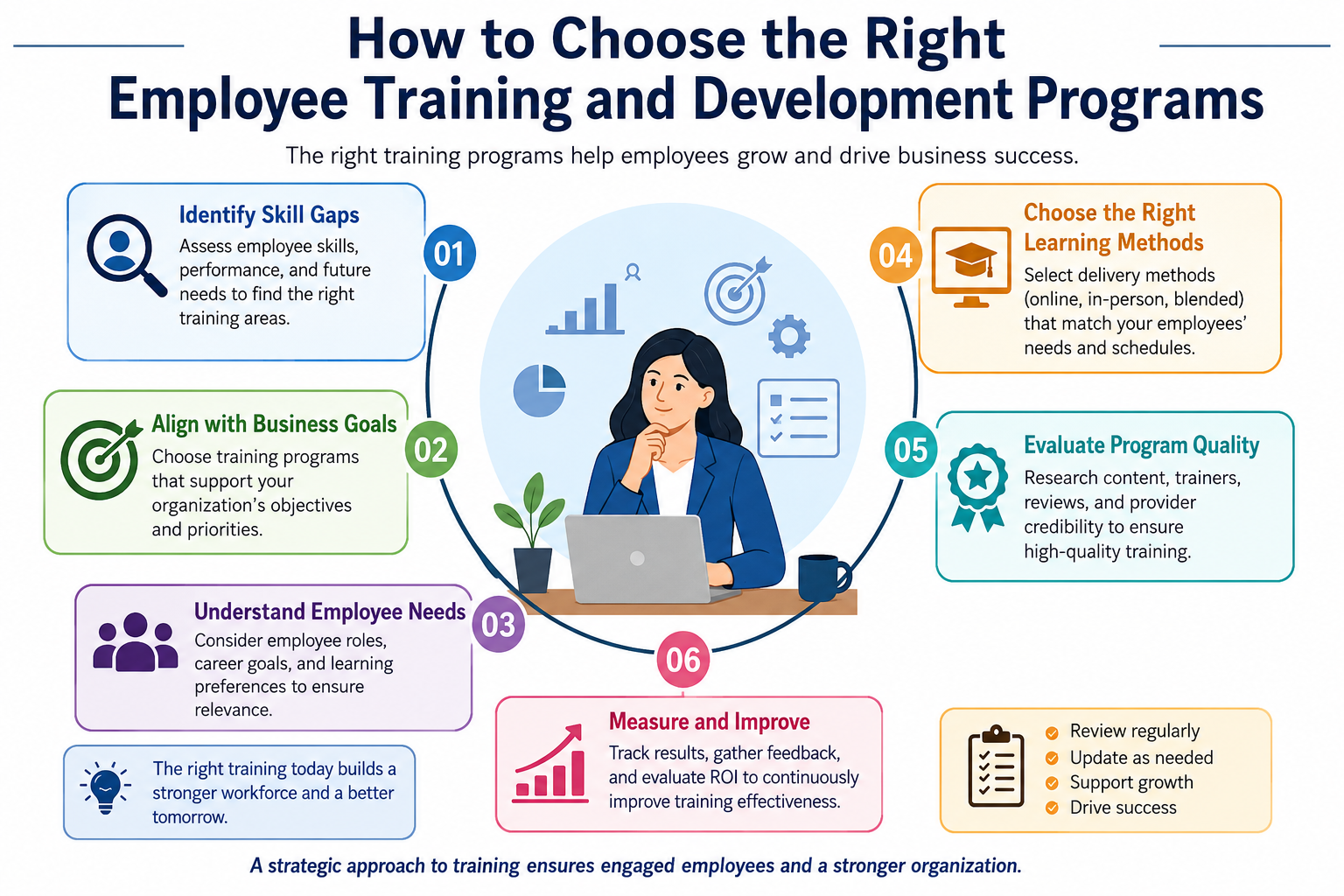
Selecting the right Employee Training and Development Programs is essential for achieving meaningful results. Organizations should focus on programs that align with business objectives and employee needs.
Identify Skill Gaps
Begin by assessing employee performance and identifying areas that require improvement. Skills assessments, performance reviews, and employee feedback can provide valuable insights.
Align Training with Business Goals
Training should support organizational priorities such as productivity improvement, leadership development, customer satisfaction, or digital transformation.
Understand Employee Needs
Different employees have different career goals and learning preferences. Personalized learning opportunities often generate better engagement and outcomes.
Choose Effective Learning Methods
Organizations should offer multiple learning formats including workshops, online courses, mentoring, coaching, and interactive training sessions.
Measure Success
Establish key performance indicators before launching training initiatives. Tracking productivity, retention, engagement, and performance improvements helps determine effectiveness.
A strategic approach ensures that Employee Training and Development Programs deliver maximum value for both employees and the organization.
1. Onboarding and Orientation Programs
Onboarding and orientation programs are among the most important Employee Training and Development Programs because they establish the foundation for long-term employee success. A positive onboarding experience helps new employees understand company culture, workplace expectations, and job responsibilities from the very beginning.
Many organizations mistakenly view onboarding as a one-day event. However, effective onboarding is an ongoing process that may extend over several weeks or months. During this period, employees learn about company policies, team structures, performance expectations, technology systems, and organizational values.
A structured onboarding program helps employees become productive more quickly while reducing anxiety and uncertainty. It also improves employee confidence and engagement, making it easier for new hires to integrate into the workplace.
Benefits of Onboarding Programs
- Faster productivity
- Improved employee confidence
- Better workplace integration
- Higher engagement
- Increased retention
Organizations with effective onboarding processes often experience lower turnover rates and stronger employee satisfaction levels.
2. Leadership Development Programs
Leadership development remains one of the most valuable Employee Training and Development Programs available today. Strong leadership directly influences employee performance, organizational culture, and long-term business success.
Leadership programs are designed to prepare employees for management and executive roles by developing essential skills such as communication, decision-making, strategic thinking, emotional intelligence, and conflict resolution.
As organizations grow, they require capable leaders who can motivate teams, manage change, and drive innovation. Leadership development ensures businesses have a strong pipeline of future leaders ready to take on greater responsibilities.
These programs often include coaching, mentoring, workshops, simulations, and experiential learning opportunities that help participants build confidence and leadership capabilities.
Benefits of Leadership Development Programs
- Stronger succession planning
- Better team performance
- Improved employee engagement
- Increased workplace collaboration
- Enhanced organizational stability
Organizations that invest in leadership development are better positioned to navigate challenges and achieve sustainable growth.
3. Technical Skills Training Programs
Technology is transforming nearly every industry, making technical training a critical component of modern Employee Training and Development Programs.
Employees must continually update their technical knowledge to remain effective and competitive. Technical skills training focuses on role-specific competencies that improve workplace performance and support organizational goals.
Common technical training areas include:
- Data analytics
- Cybersecurity
- Cloud computing
- Artificial intelligence
- Automation tools
- Software applications
- Industry-specific systems
Technical training helps employees work more efficiently, reduce errors, and adapt to technological changes. It also enables organizations to remain competitive in increasingly digital markets.
Benefits of Technical Skills Training
- Improved efficiency
- Higher productivity
- Better problem-solving abilities
- Reduced operational errors
- Enhanced innovation
Organizations that invest in technical training gain a significant competitive advantage by building a future-ready workforce.
4. Soft Skills Development Programs
While technical expertise is important, soft skills often determine how effectively employees work with colleagues, customers, and stakeholders. This is why soft skills training has become one of the fastest-growing Employee Training and Development Programs across industries.
Soft skills include communication, teamwork, adaptability, emotional intelligence, problem-solving, leadership, and time management. These abilities help employees build strong workplace relationships and perform effectively in dynamic work environments.
Organizations increasingly recognize that employees with strong interpersonal skills contribute to better collaboration, customer satisfaction, and overall business performance. For example, an employee may have excellent technical knowledge but struggle to communicate ideas clearly or work effectively within a team. Soft skills training addresses these gaps and improves workplace effectiveness.
Key Areas Covered
- Communication skills
- Teamwork and collaboration
- Emotional intelligence
- Time management
- Adaptability
- Critical thinking
- Conflict resolution
Benefits of Soft Skills Development
- Improved teamwork
- Better customer interactions
- Stronger workplace culture
- Enhanced leadership potential
- Increased employee confidence
As workplaces become more collaborative and customer-focused, soft skills development remains a crucial component of successful Employee Training and Development Programs.
5. Compliance Training Programs
Compliance training helps organizations meet legal, ethical, and industry-specific requirements while protecting employees and the business from potential risks.
These Employee Training and Development Programs educate employees about company policies, workplace regulations, and professional standards. Compliance training is particularly important in industries such as healthcare, finance, manufacturing, and technology where regulations frequently change.
A well-designed compliance program ensures employees understand their responsibilities and follow established guidelines. It also reduces the likelihood of legal issues, workplace accidents, and security breaches.
Common Compliance Topics
- Workplace safety
- Data protection and privacy
- Cybersecurity awareness
- Anti-harassment policies
- Diversity and inclusion
- Industry regulations
Benefits of Compliance Training
- Reduced legal risks
- Improved workplace safety
- Better regulatory compliance
- Enhanced company reputation
- Increased employee awareness
Organizations that prioritize compliance training create safer, more responsible, and legally compliant workplaces.
6. Customer Service Training Programs
Customer satisfaction plays a major role in business success. Customer service training helps employees deliver exceptional experiences that improve customer loyalty and strengthen brand reputation.
Customer-facing employees often serve as the first point of contact between a business and its customers. Their ability to communicate effectively, resolve problems, and provide support directly impacts customer perceptions.
These Employee Training and Development Programs teach employees how to understand customer needs, handle complaints professionally, and create positive interactions.
Topics Covered
- Active listening
- Communication techniques
- Conflict resolution
- Customer relationship management
- Problem-solving strategies
- Service excellence
Benefits of Customer Service Training
- Higher customer satisfaction
- Improved customer loyalty
- Better brand reputation
- Increased sales opportunities
- Stronger customer relationships
Businesses that consistently deliver excellent customer experiences often achieve higher revenue growth and long-term success.
7. Sales Training Programs
Sales teams play a critical role in generating revenue and driving business growth. Sales training programs help employees improve selling techniques, build stronger customer relationships, and increase conversion rates.
Consumer behavior and market trends constantly evolve, making continuous learning essential for sales professionals. Effective sales training equips employees with modern strategies that help them remain competitive.
Areas of Focus
- Prospecting and lead generation
- Sales communication
- Negotiation skills
- Product knowledge
- Relationship building
- Closing techniques
Benefits of Sales Training
- Increased revenue
- Improved sales performance
- Higher conversion rates
- Better customer retention
- Greater employee confidence
Organizations that invest in sales development often outperform competitors because their teams are better prepared to meet customer needs and close deals effectively.
8. Digital Learning and E-Learning Programs
Technology has transformed workplace learning, making digital learning one of the most effective Employee Training and Development Programs available today.
Digital learning allows employees to access training materials anytime and anywhere. This flexibility is particularly valuable for remote and hybrid workforces.
Organizations can use Learning Management Systems (LMS), online courses, webinars, virtual classrooms, and mobile learning applications to deliver consistent training experiences.
Advantages of Digital Learning
- Flexible access
- Lower training costs
- Scalable learning solutions
- Personalized learning paths
- Easy progress tracking
Benefits
- Continuous learning opportunities
- Increased employee engagement
- Improved accessibility
- Faster knowledge delivery
- Better workforce development
As businesses continue embracing digital transformation, e-learning will remain a key driver of employee growth and organizational success.
9. Diversity, Equity, and Inclusion (DEI) Training
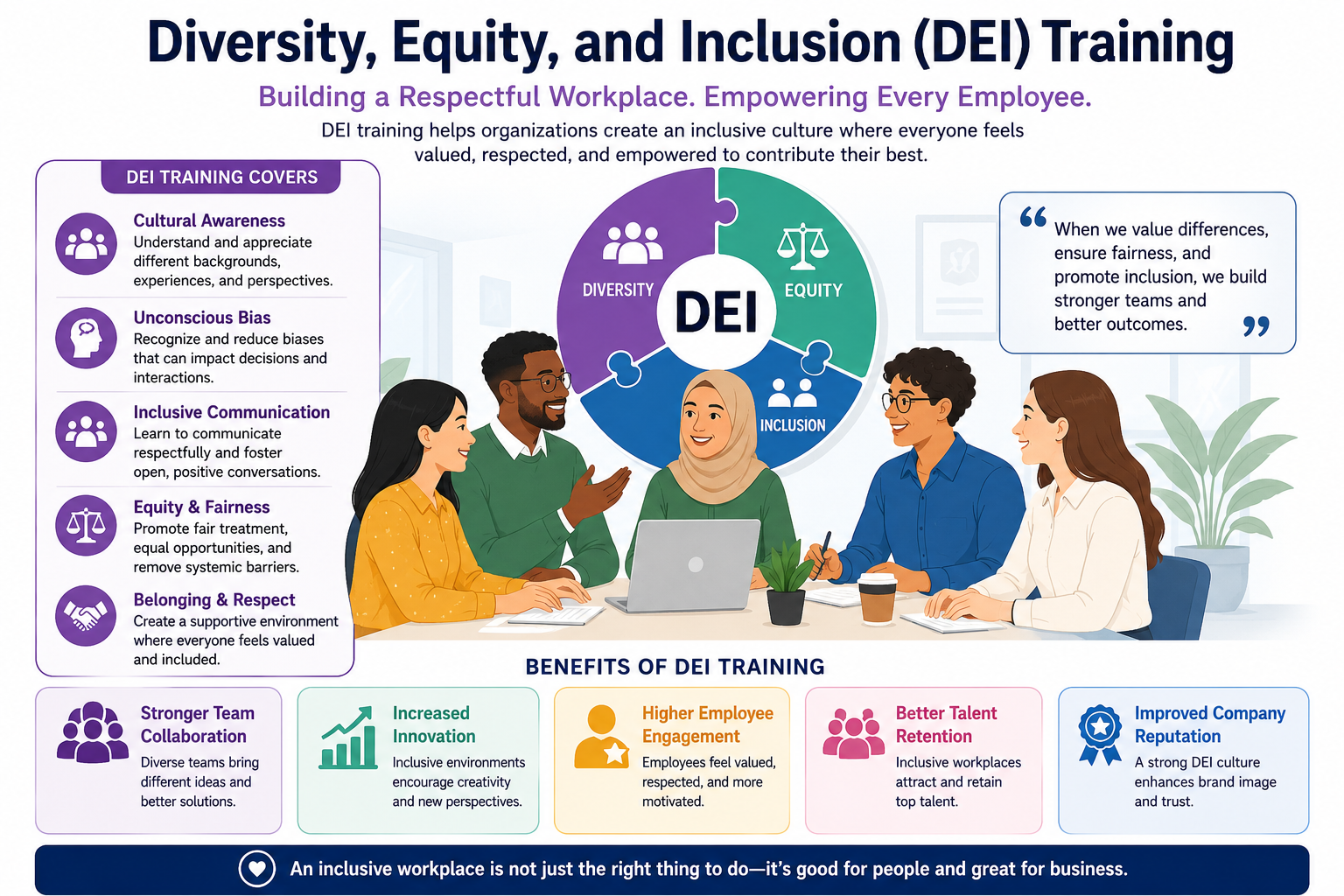
Modern organizations recognize the importance of creating inclusive workplaces where employees from diverse backgrounds feel respected and valued.
DEI training helps employees understand cultural differences, reduce unconscious bias, and promote respectful workplace interactions.
These Employee Training and Development Programs encourage collaboration, strengthen workplace culture, and support organizational innovation.
Key Topics
- Cultural awareness
- Inclusive communication
- Unconscious bias
- Workplace respect
- Equal opportunity practices
Benefits
- Improved employee engagement
- Stronger collaboration
- Enhanced workplace culture
- Increased innovation
- Better team performance
Organizations with inclusive cultures often attract and retain top talent while fostering greater creativity and innovation.
10. Career Development and Upskilling Programs
Career development programs focus on helping employees achieve long-term professional growth. These initiatives prepare employees for future opportunities while addressing evolving business needs.
Upskilling and reskilling have become particularly important as technology changes job requirements across industries.
Career development programs often include mentoring, coaching, certifications, leadership preparation, and specialized training opportunities.
Benefits
- Improved employee retention
- Stronger workforce capabilities
- Better succession planning
- Increased employee satisfaction
- Enhanced organizational growth
Employees who see opportunities for advancement are more likely to remain engaged and committed to their organizations.
How Employee Training and Development Programs Improve Business Growth
Organizations that invest in workforce development consistently outperform competitors because they create skilled, adaptable, and motivated teams.
Higher Productivity
Employees who receive training perform tasks more efficiently, make fewer mistakes, and contribute more effectively to organizational goals.
Better Customer Experiences
Well-trained employees provide better service, leading to higher customer satisfaction and loyalty.
Increased Innovation
Continuous learning encourages employees to develop creative solutions and embrace new technologies.
Reduced Turnover Costs
Employees are more likely to stay with organizations that invest in their professional growth.
Improved Operational Efficiency
Training helps employees follow best practices, reducing waste and improving overall performance.
As employees continuously improve their skills, organizations become more agile and capable of responding to changing market demands.
Employee Retention and Workforce Development
Employee retention remains one of the biggest challenges facing modern organizations. Replacing skilled employees requires significant time and resources.
Employee Training and Development Programs improve retention by providing opportunities for growth and advancement. Employees who feel valued and supported are more likely to remain loyal to their employers.
Professional development initiatives demonstrate organizational commitment to employee success while creating a stronger workplace culture.
Creating a Continuous Learning Culture
Organizations that embrace continuous learning are better positioned for long-term success.
A learning culture encourages employees to:
- Seek new knowledge
- Share expertise
- Develop new skills
- Adapt to change
- Pursue career growth
Leaders play a critical role by supporting training initiatives and recognizing employee achievements.
When learning becomes part of everyday work, organizations become more innovative, productive, and resilient.
Common Challenges and Solutions
Limited Budgets
Organizations can utilize digital learning platforms to reduce costs while maintaining quality.
Low Employee Participation
Align training with career goals and communicate benefits clearly.
Time Constraints
Offer flexible learning options such as self-paced online courses.
Measuring ROI
Establish clear performance indicators before implementing training initiatives.
Future Trends in Employee Training and Development Programs
The future of workplace learning continues to evolve.
Artificial Intelligence
AI-powered platforms personalize learning experiences based on employee needs and performance data.
Microlearning
Short, focused lessons improve engagement and knowledge retention.
Virtual Reality Training
Immersive learning experiences help employees practice skills in realistic environments.
Skills-Based Development
Organizations increasingly focus on skills rather than traditional job titles.
Learning Analytics
Data-driven insights help improve training effectiveness and decision-making.
Businesses that embrace these trends will be better prepared for future workforce challenges.
Conclusion
Employee Training and Development Programs are no longer optional for organizations that want to remain competitive. They play a crucial role in improving employee performance, increasing engagement, enhancing customer satisfaction, and driving business growth.
From onboarding and leadership development to technical training, soft skills development, compliance education, customer service training, sales coaching, digital learning, diversity initiatives, and career advancement programs, each training strategy contributes to a stronger workforce.
Organizations that invest in continuous learning create employees who are more productive, innovative, and adaptable. These benefits ultimately lead to improved operational efficiency, reduced turnover, stronger leadership pipelines, and sustainable business success.
As workplace demands continue to evolve, businesses that prioritize Employee Training and Development Programs will be better positioned to attract top talent, retain valuable employees, and achieve long-term growth.
Frequently Asked Questions (FAQs)
What are Employee Training and Development Programs?
Employee Training and Development Programs are structured learning initiatives designed to improve employees’ knowledge, skills, competencies, and overall performance. Training focuses on current job responsibilities, while development prepares employees for future roles and career growth.
Why are Employee Training and Development Programs important?
These programs improve productivity, employee engagement, retention, customer satisfaction, leadership development, and organizational performance. They also help businesses remain competitive in rapidly changing markets.
What is the difference between employee training and employee development?
Employee training focuses on improving skills required for current job responsibilities. Employee development focuses on long-term career growth, leadership preparation, and future opportunities within the organization.
What are the most effective Employee Training and Development Programs?
Some of the most effective programs include onboarding training, leadership development, technical skills training, soft skills development, compliance training, customer service training, sales training, digital learning, DEI training, and career development programs.
How do Employee Training and Development Programs improve employee retention?
Employees are more likely to stay with organizations that invest in their growth. Learning opportunities increase job satisfaction, engagement, loyalty, and career advancement prospects.
How can organizations measure training effectiveness?
Organizations can track productivity, employee engagement, retention rates, customer satisfaction, performance improvements, and business outcomes to evaluate training success.
What are the latest trends in Employee Training and Development Programs?
Current trends include AI-powered learning, microlearning, virtual reality training, personalized learning paths, skills-based development, and data-driven learning analytics.
How often should employee training be conducted?
Training should be an ongoing process rather than a one-time event. Organizations should provide continuous learning opportunities throughout the year to keep employees updated and engaged.
 Contact Us
Looking to implement effective employee training and development programs ? Reach out to our team for customized solutions.
 Address:
Vivek Khand, Gomti Nagar, Lucknow, India
 Email:
 Phone:
- +91 99569 98880
- +91 94100 66699
 Website:
https://navigategrowth.in/
Instagram: https://www.instagram.com/thegrowthmindset.official/