
Leadership Training Programs for Managers: 7 Proven Ways to Boost Growth
Leadership training programs for managers help build strong leaders by improving communication, decision-making, and team management skills.
These programs boost productivity, increase employee engagement, and support long-term business growth.
Investing in leadership development ensures organizations stay competitive and future-ready.
📑 Table of Contents
- Introduction to Leadership Training Programs for Managers
- Why Leadership Training Programs for Managers Matter in 2026
- 7 Proven Leadership Training Programs for Managers
- Key Leadership Skills for Managers in 2026
- Benefits of Leadership Training rograms
- Challenges in Leadership Training Programs & Solutions
- How to Choose the Right Leadership Training Programs
- ROI of Leadership Training Programs
- Future Trends in Leadership Training for Managers
- Conclusion
- FAQs
Introduction
In the modern business environment, organizations are under constant pressure to perform, adapt, and grow. However, one critical factor often determines whether a company succeeds or struggles—leadership quality. This is where leadership training programs for managers become essential.
Many companies promote employees into managerial roles based on performance, not leadership ability. As a result, managers may lack the skills required to lead teams effectively, resulting in communication gaps, low morale, and reduced productivity.
In 2026, leadership training programs are designed to go beyond traditional teaching. They focus on real-world application, emotional intelligence, digital leadership, and measurable outcomes. These programs are structured to transform managers into confident leaders who can guide teams, solve problems, and drive business growth.
This blog explores the foundation of leadership training programs, including their importance, objectives, proven methods, and the key skills every manager must develop.
Why Leadership Training Programs for Managers Matter
1. Addressing Leadership Gaps
- Many managers lack formal leadership education
- Training fills critical skill gaps
- Helps transition from “doer” to “leader”
2. Enhancing Productivity
- Skilled managers improve team efficiency
- Clear communication reduces errors
- Better planning leads to better results
3. Improving Employee Retention
- Employees leave managers, not companies
- Strong leadership builds trust and loyalty
4. Supporting Business Growth
- Leaders align team goals with company vision
- Strategic thinking drives long-term success
5. Adapting to Modern Work Environments
- Hybrid and remote work require new leadership styles
- Training prepares managers for digital workplaces
Core Objectives of Leadership Training Programs
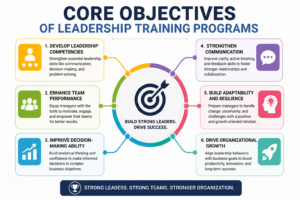
1. Develop Strong Leadership Mindset
- Shift from task-focused to people-focused leadership
- Encourage accountability and ownership
2. Improve Communication Skills
- Clear, concise, and effective communication
- Active listening and feedback techniques
3. Build Decision-Making Ability
- Use data and insights for better decisions
- Improve problem-solving skills
4. Strengthen Team Management
- Motivate and inspire employees
- Manage diverse teams effectively
5. Enhance Emotional Intelligence
- Understand team emotions
- Handle conflicts professionally
7 Proven Leadership Training Programs for Managers
1. Leadership Training Programs: Classroom Learning
- Traditional but effective
- Provides structured knowledge
- Best for foundational leadership concepts
2. Leadership Training: Online Training
- Flexible and scalable
- Ideal for remote teams
- Cost-effective solution
3. Leadership Training: Executive Coaching
- Personalized one-on-one sessions
- Focus on individual growth
- High ROI for senior managers
4. Leadership Training: Workshops
- Interactive and engaging
- Focus on real-world problem-solving
- Encourages collaboration
5. Leadership Training Programs: Mentorship Programs
- Learning from experienced leaders
- Practical guidance and support
6. Leadership Training Programs: On-the-Job Training
- Learn while working
- Immediate application of skills
7. Leadership Training Programs: Blended Learning
- Combination of online and offline training
- Most effective and modern approach
-
# Leadership Training Programs for Managers Description Best For Key Benefit 1 Classroom Leadership Training Programs for Managers Instructor-led structured sessions New managers Strong leadership foundation 2 Online Leadership Training Programs for Managers Flexible digital learning Remote teams Convenience and scalability 3 Executive Coaching for Managers Personalized one-on-one coaching Senior leaders High-impact development 4 Workshop-Based Leadership Training Programs for Managers Interactive practical sessions Team leaders Real-world problem solving 5 Mentorship Leadership Training Programs for Managers Learning from experienced leaders New managers Practical guidance 6 On-the-Job Leadership Training Programs for Managers Learning while working All managers Immediate skill application 7 Blended Leadership Training Programs for Managers Online + offline learning mix Modern organizations Most effective approach
Key Leadership Skills Managers Need in 2026
1. Communication Skills
- Clear communication improves team alignment
- Reduces misunderstandings
- Builds trust
2. Emotional Intelligence
- Recognize and manage emotions
- Build stronger relationships
- Improve team morale
3. Strategic Thinking
- Align team goals with business objectives
- Focus on long-term success
4. Decision-Making
- Use data-driven insights
- Make confident decisions
5. Adaptability
- Handle change effectively
- Lead teams during uncertainty
6. Conflict Resolution
- Manage disagreements professionally
- Maintain team harmony
7. Digital Leadership
- Use digital tools effectively
- Manage remote teams efficiently
Role of Leadership Training Programs for Managers in Employee Engagement
Employee engagement is directly linked to leadership quality. Organizations with strong leaders experience higher engagement levels.
How Leadership Training Improves Engagement:
- Builds Trust: Employees feel secure under strong leadership
- Encourages Open Communication: Managers listen and respond effectively
- Provides Growth Opportunities: Employees feel valued and motivated
- Boosts Morale: Positive leadership creates a healthy work environment
Key Impact Areas:
- Increased productivity
- Lower absenteeism
- Higher job satisfaction
Leadership Training Programs for Managers and Organizational Culture
Leadership plays a crucial role in shaping company culture.
How Training Influences Culture:
- Promotes Positive Work Environment
- Encourages Collaboration
- Strengthens Company Values
- Improves Transparency and Trust
Managers who undergo leadership training programs become culture drivers who influence team behavior and workplace environment.
Measuring Success of Leadership Training Programs for Managers
One of the biggest concerns for organizations is measuring the effectiveness of training programs.
Key Metrics to Track:
1. Employee Performance
- Improvement in productivity
- Better task completion rates
2. Employee Engagement
- Survey results
- Feedback scores
3. Retention Rates
- Reduced employee turnover
4. Leadership Effectiveness
- Manager performance reviews
- Team feedback
5. Business Outcomes
- Revenue growth
- Project success rates
Pro Tip:
Use data analytics tools to track and improve training outcomes continuously.
Benefits of Leadership Training Programs for Managers
Investing in leadership training programs for managers is one of the smartest decisions organizations can make in 2026. These programs not only improve leadership capabilities but also create a strong foundation for long-term business success.
1. Improved Productivity
- Leadership training for managers help leaders set clear goals and expectations
- Managers learn how to delegate tasks effectively
- Teams become more efficient and focused
2. Increased Employee Engagement
- Employees feel valued when guided by trained leaders
- Better communication improves workplace relationships
- High engagement leads to better performance
3. Strong Decision-Making Skills
- Managers develop analytical thinking
- Leadership training for managers focus on data-driven decisions
- Reduces business risks and improves outcomes
4. Better Employee Retention
- Employees prefer working under skilled managers
- A positive environment reduces turnover
- Improves long-term workforce stability
5. Enhanced Team Collaboration
- Leaders encourage teamwork and collaboration
- Improves coordination across departments
- Builds a unified work culture
6. Strong Organizational Culture
- Leaders influence company values and behavior
- Leadership training programs for managers promote transparency
- Encourages accountability and trust
7. Increased Business Growth
- Better leadership leads to better results
- Aligns team efforts with company goals
- Drives revenue and profitability
Challenges in Leadership Training Programs for Managers & Solutions
Organizations often face time constraints, low engagement, difficulty measuring results, resistance to change, and lack of customization. These can be solved by using flexible learning formats, interactive sessions, clear performance metrics, strong communication, and tailored programs aligned with business goals. Addressing these challenges ensures better participation, effective learning, and successful implementation of training initiatives.
While leadership training programs offer significant benefits, organizations often face challenges in implementation.
1. Lack of Time
- Managers have busy schedules
- Hard to attend long sessions
Solution:
- Use flexible and short learning modules
- Provide online leadership training programs for managers
2. Low Engagement
- Traditional training methods can be boring
Solution:
- Use interactive workshops
- Include real-life case studies
- Gamify leadership training for managers
3. Difficulty in Measuring ROI
- Hard to track results
Solution:
- Use KPIs like productivity, engagement, and retention
- Apply analytics tools
4. Resistance to Change
- Managers may resist new learning methods
Solution:
- Communicate benefits clearly
- Involve managers in decision-making
5. Lack of Customization
- Generic programs may not fit business needs
Solution:
- Choose tailored leadership training for managers
- Align training with business goals
How to Choose Leadership Training Programs for Managers
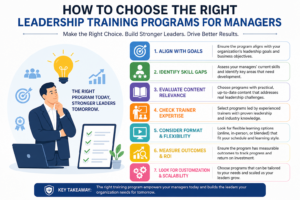
Choose a program by aligning it with business goals and identifying manager skill gaps. Evaluate training formats, content relevance, and trainer expertise. Prefer practical, real-world learning with measurable outcomes. Ensure flexibility, customization, and scalability. A well-chosen program should improve performance, support growth, and deliver clear, trackable results for the organization.
Selecting the right leadership training programs for managers is essential for achieving desired outcomes.
1. Define Business Goals
- Identify key objectives
- Align training with company vision
2. Assess Skill Gaps
- Evaluate current leadership capabilities
- Choose programs that address weaknesses
3. Choose the Right Format
- Online, offline, or blended learning
- Select based on team structure
4. Evaluate Trainers
- Experienced trainers provide better insights
- Industry expertise matters
5. Focus on Practical Learning
- Real-world application is crucial
- Avoid overly theoretical programs
6. Measure Performance
- Track results and improvements
- Ensure continuous development
ROI of Leadership Training Programs for Managers
Many organizations hesitate to invest in leadership training programs due to cost concerns.Return on investment comes from improved productivity, better decision-making, and stronger team performance. Trained leaders reduce employee turnover, enhance engagement, and drive business efficiency. Over time, these improvements lead to higher profitability, smoother operations, and sustainable growth, making training a valuable long-term investment for any organization.
However, the return on investment is substantial.
Costs Include:
- Training fees
- Time investment
- Learning resources
Returns Include:
- Increased productivity
- Better leadership effectiveness
- Higher employee satisfaction
- Reduced turnover
- Improved business performance
Key Insight
Well-implemented leadership training programs for managers lead to long-term profitability and sustainable growth.
Industry-Based Leadership Training Programs for Managers
Different industries require specialized leadership training programs for managers.
1. IT & Technology
- Focus on innovation and agility
2. Healthcare
- Emphasis on empathy and decision-making
3. Manufacturing
- Focus on efficiency and operations
4. Retail
- Customer-focused leadership
5. Startups
- Adaptability and quick decision-making
Future Trends in Leadership Training Programs for Managers
The future of leadership training programs is evolving rapidly.
1. AI-Powered Training
- Personalized learning experiences
- Smart recommendations
2. Microlearning
- Short and focused lessons
- Better retention
3. Hybrid Learning Models
- Online + offline combination
4. Data-Driven Training
- Use analytics to improve effectiveness
5. Focus on Employee Well-Being
- Leaders trained to support mental health
Conclusion
In today’s fast-changing business environment, leadership training programs for managers have become essential for building strong, capable leaders who can drive sustainable growth. As discussed across both parts, these programs play a critical role in developing key leadership skills, improving employee engagement, strengthening organizational culture, and enhancing overall productivity. From understanding the core objectives and proven training methods to exploring real business benefits, ROI, and future trends, it is clear that investing in the right leadership development approach delivers long-term value.
Organizations that invest in leadership training programs for managers can:
- Improve productivity
- Increase employee engagement
- Build strong leadership pipelines
- Achieve long-term business success
Investing in the right leadership training programs is not optional—it is a strategic necessity.
FAQs:
1. What are leadership training programs for managers and how do they help improve business performance?
Leadership training programs for managers are structured learning initiatives designed to develop essential leadership skills such as communication, decision-making, emotional intelligence, and team management. These programs help managers lead teams more effectively, align goals with business objectives, and improve overall productivity. By implementing leadership training programs for managers, organizations can enhance employee performance, reduce errors, and create a more efficient and results-driven work environment.
2. Why are leadership training programs for managers important for employee engagement and retention in 2026?
Leadership training programs for managers play a crucial role in improving employee engagement and retention by creating a positive and supportive work environment. Trained managers understand how to motivate employees, provide constructive feedback, and build strong relationships. This leads to higher job satisfaction, reduced turnover, and increased loyalty. In 2026, where employee expectations are evolving, leadership training programs for managers help organizations maintain a motivated and committed workforce.
3. How do leadership training programs for managers improve productivity and team performance?
Leadership training programs for managers improve productivity by equipping leaders with the skills needed to manage teams efficiently. Managers learn how to delegate tasks, set clear goals, and monitor performance effectively. These programs also enhance communication and collaboration, reducing misunderstandings and delays. As a result, teams work more efficiently, achieve targets faster, and contribute to overall business growth.
4. What are the most effective types of leadership training programs in modern organizations?
The most effective leadership training programs for managers include classroom training, online learning, executive coaching, workshops, mentorship programs, on-the-job training, and blended learning approaches. Each type offers unique benefits depending on the organization’s needs. For example, executive coaching provides personalized development, while blended learning combines flexibility and practical experience, making it one of the most effective approaches in 2026.
5. How can businesses measure the success and ROI of leadership training programs for managers?
Businesses can measure the success of leadership training programs for managers by tracking key performance indicators such as employee productivity, engagement levels, retention rates, and overall business performance. Feedback from employees and performance reviews also provide valuable insights. A positive ROI is reflected in improved team efficiency, reduced turnover costs, and increased profitability, making leadership training a valuable long-term investment.
6. How should organizations choose the right leadership training programs based on their business needs?
Organizations should choose leadership training programs for managers by first identifying their business goals and leadership skill gaps. They should evaluate training formats, customization options, and trainer expertise. It is also important to select programs that focus on practical learning and measurable outcomes. Choosing the right leadership training programs ensures that managers gain relevant skills that directly impact business success.
7. What are the future trends shaping leadership training programs in 2026 and beyond?
Leadership training programs for managers are evolving with trends such as AI-powered learning, microlearning, hybrid training models, and data-driven insights. These innovations make training more personalized, flexible, and effective. Additionally, there is a growing focus on employee well-being and emotional intelligence, ensuring that managers can lead teams in a more human-centric and adaptive way.
Summary:
Leadership training programs for managers are essential for building strong leaders in today’s competitive business environment. They help managers develop key skills like communication, decision-making, and team management.
These programs play a major role in improving productivity, employee engagement, and overall business performance. Organizations that invest in leadership development see better results and stronger team alignment.
There are various effective training methods such as coaching, workshops, online learning, and blended programs. Choosing the right approach depends on business goals and manager needs
Despite challenges like time constraints and ROI measurement, the right strategies can ensure successful implementation. Modern trends like AI learning and microlearning are making training more effective.
Overall, investing in leadership training helps organizations grow, build future leaders, and stay competitive in 2026 and beyond.
📞 Contact Us
Looking to implement effective leadership training programs for managers? Reach out to our team for customized solutions.
📍 Address:
Vivek Khand, Gomti Nagar, Lucknow, India
📧 Email:
📱 Phone:
- +91 99569 98880
- +91 94100 66699
🌐 Website:
https://navigategrowth.in/
Instagram: https://www.instagram.com/thegrowthmindset.official/