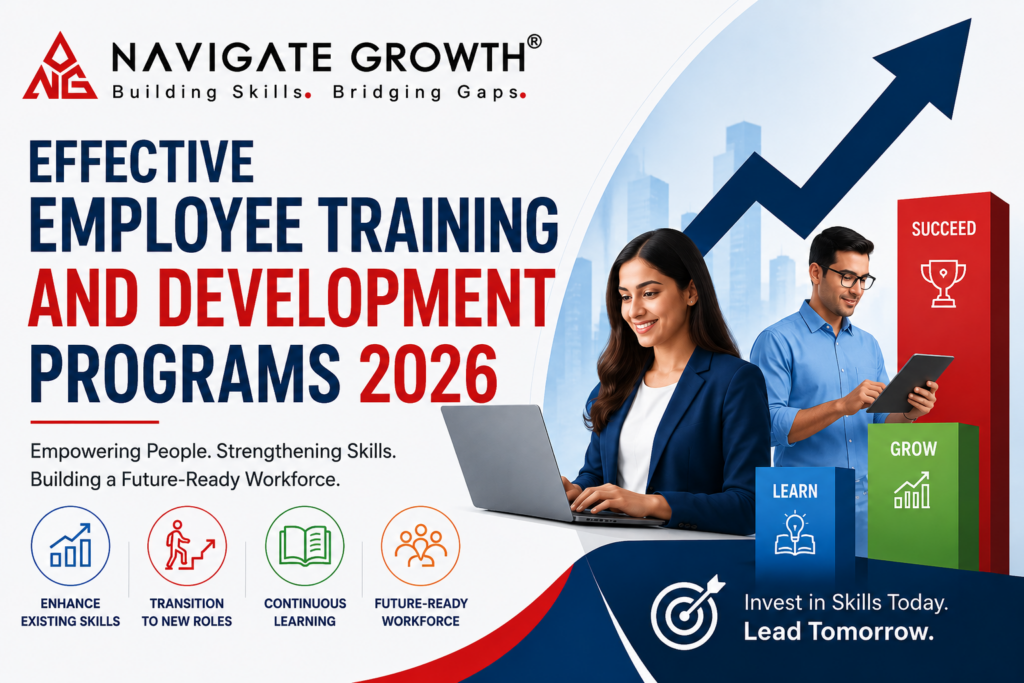
Discover the top 10 employee training and development strategies for 2026 to boost productivity, engagement, and future-ready workforce success.
📑 Table of Contents
- Introduction to Employee Training and Development Programs
- Personalized Learning in Employee Training and Development Programs
- AI-Powered Employee Training and Development Programs
- Microlearning in Employee Training and Development Programs
- Upskilling and Reskilling Initiatives
- Blended Learning Approach
- Gamification in Employee Training and Development Programs
- Remote and Hybrid Training Models
- Mentorship and Coaching Programs
- Data-Driven Training Decisions
- Continuous Learning Culture
- Strategy Comparison Table
- Conclusion
- Frequently Asked Questions (FAQs)
Employee Training and Development Programs: Introduction
In today’s rapidly evolving business environment, organizations can no longer rely on outdated skills or traditional learning methods. Employee training and development programs have become a crucial part of building a competitive and future-ready workforce. As industries continue to adopt new technologies and adapt to changing market demands, companies must invest in continuous learning to stay ahead.
Employee training and development programs not only help employees enhance their existing skills but also prepare them for future roles within the organization. These programs focus on improving performance, increasing productivity, and boosting employee engagement. When employees feel supported in their growth, they are more likely to stay motivated and committed to their work.
Moreover, modern employee training and development programs go beyond basic training sessions. They now include personalized learning paths, digital tools, and interactive methods such as microlearning and gamification. This shift ensures that employees learn more effectively and retain knowledge for a longer time.
In 2026, businesses that prioritize learning and development will have a clear advantage over their competitors. Investing in the right strategies not only improves individual performance but also contributes to overall organizational success. This blog explores the top strategies that can help companies design impactful training programs and build a strong, skilled workforce for the future.
1. Personalized Learning in Employee Training and Development Programs
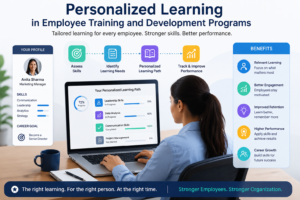
One of the most effective strategies in modern workplaces is personalized learning. In 2026, businesses are moving away from one-size-fits-all approaches and focusing on customized employee training and development programs that match individual needs. Every employee has different skills, learning speeds, and career goals, so providing tailored training ensures better results and higher engagement.
- Focuses on customized training based on each employee’s skills, role, and career goals
- Replaces the one-size-fits-all approach with tailored learning paths
- Helps identify individual skill gaps through assessments and performance analysis
Personalized employee training and development programs allow organizations to assess each employee’s strengths and weaknesses. Based on this analysis, companies can design learning paths that focus on specific skill gaps. For example, a marketing professional may need advanced analytics training, while a manager might benefit more from leadership development programs. This targeted approach makes learning more relevant and practical.
Another key advantage of personalized learning is improved knowledge retention. When employees receive training that directly relates to their job roles, they are more likely to understand and apply what they learn. Modern tools like AI-based platform employee training and development programs and learning management systems (LMS) make it easier to deliver customized content, track progress, and adjust training as needed.
Furthermore, personalized employee training and development programs help boost employee satisfaction and motivation. When individuals feel that their growth is valued, they become more committed to the organization. This not only improves performance but also reduces employee turnover.
Overall, personalized learning is a powerful strategy that ensures training is effective, relevant, and aligned with both employee and organizational goals.
2. AI-Powered Employee Training and Development Programs
Artificial Intelligence (AI) is transforming how organizations design and deliver employee training and development programs. In 2026, AI-driven tools are making training smarter, faster, and more personalized. Instead of relying on generic content, companies can now use AI to analyze employee performance, learning behavior, and skill gaps to deliver highly relevant training experiences.
One of the biggest advantages of AI in employee training and development programs is its ability to recommend customized learning paths. AI systems can track an employee’s progress in real time and suggest courses, modules, or resources that match their specific needs. This ensures that employees focus only on the skills that matter most, saving time and improving efficiency.
AI also enhances the learning experience through features like chatbots, virtual assistants, and automated feedback systems. These tools provide instant support, answer queries, and guide employees throughout their learning journey. As a result, employees can learn at their own pace without feeling stuck or unsupported.
Another important benefit of AI-powered employee training and development programs is data-driven decision-making. Organizations can collect insights on training effectiveness, completion rates, and performance improvements. This data helps businesses continuously refine their training strategies and ensure better outcomes.
Overall, AI is revolutionizing workplace learning by making training more adaptive, engaging, and results-oriented. Companies that adopt AI-driven training solutions will be better equipped to build a skilled and future-ready workforce.
3. Microlearning in Employee Training and Development Programs
Microlearning delivers content in short, focused modules. This modern approach improves employee training and development programs by making learning quick and effective.
- Microlearning focuses on delivering training in short, bite-sized modules that are easy to understand and remember.
- It improves knowledge retention by breaking complex topics into small, focused lessons.
- Employees can access content anytime and anywhere, making it ideal for busy work schedules.
- Supports mobile learning, allowing employees to learn on smartphones or tablets.
- Helps in quick skill development by focusing on specific tasks or concepts.
- Increases engagement through interactive formats like videos, quizzes, and infographics.
- Reduces training time while still delivering effective learning outcomes.
- Allows employees to learn at their own pace, improving flexibility and comfort.
- Easy to update and scale, making it cost-effective for organizations.
- Encourages continuous learning by making training simple and accessible.
Employees can access bite-sized lessons anytime, which improves retention and allows immediate application in real work scenarios.
4. Upskilling and Reskilling Initiatives
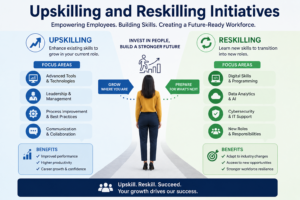
Upskilling and reskilling are essential for keeping employees relevant in a changing job market. Strong employee training and development programs focus on helping employees learn new skills and improve existing ones.
Upskilling enhances current abilities, while reskilling prepares employees for new roles. For example, an employee may learn new software tools or shift to a completely different department through training.
These initiatives help companies reduce hiring costs and fill skill gaps internally. They also increase employee satisfaction, as workers feel valued and supported in their career growth. Including upskilling and reskilling in employee training and development programs ensures long-term success for both employees and organizations.
5. Blended Learning Approach
Blended learning combines online and offline methods to improve employee training and development programs. Employees can learn through digital courses while also attending workshops or training sessions.
This approach provides flexibility, allowing employees to learn at their own pace. At the same time, in-person sessions help with practical understanding and collaboration.
Blended learning also supports different learning styles, making training more effective for everyone. By combining multiple methods, organizations can create more engaging and impactful employee training and development programs.
6. Gamification in Employee Training and Development Programs
Gamification adds game-like elements such as points, badges, and rewards to employee training and development programs. This makes learning more interactive and enjoyable for employees.
When training feels engaging, employees are more likely to participate and complete courses. Gamification also encourages healthy competition through leaderboards and challenges. As a result, it improves motivation and knowledge retention.
By using gamification, companies can turn boring training into an exciting experience and make employee training and development programs more effective.
7. Remote and Hybrid Training Models
Remote and hybrid training models are essential in modern employee training and development programs. With more employees working from different locations, companies need flexible training solutions.
Online platforms, video sessions, and mobile learning apps allow employees to access training anytime and anywhere. This ensures consistent learning for all team members.
Hybrid models combine online and in-person training, offering both flexibility and interaction. These methods make employee training and development programs more accessible and adaptable.
8. Mentorship and Coaching Programs
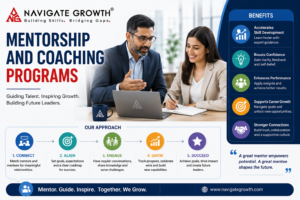
Mentorship and coaching provide personalized support in employee training and development programs. Employees learn directly from experienced professionals who guide them in their career growth.
Mentors share practical knowledge, while coaching focuses on improving specific skills and performance. This approach builds confidence and strengthens workplace relationships.
Including mentorship in employee training and development programs helps develop future leaders and creates a strong learning environment.
9. Data-Driven Training Decisions
Data-driven strategies improve the effectiveness of employee training and development programs. Organizations use analytics to track employee progress, engagement, and performance.
These insights help identify what training methods work best and where improvements are needed. For example, low course completion rates may indicate the need for simpler or more engaging content.
Using data ensures that employee training and development programs are continuously optimized for better results and higher ROI.
10. Continuous Learning Culture
A continuous learning culture is the foundation of successful employee training and development programs. Instead of one-time training, organizations encourage ongoing skill development.
Employees are motivated to keep learning through courses, workshops, and knowledge-sharing sessions. This helps them stay updated with industry trends.
Companies that promote continuous learning build a more skilled and adaptable workforce. This makes employee training and development programs more impactful and future-focused.
| # | Strategy | Key Focus | Main Benefit |
|---|---|---|---|
| 1 | Personalized Learning | Customized training paths | Better engagement & skill relevance |
| 2 | AI-Powered Training | Smart recommendations & automation | Faster and efficient learning |
| 3 | Microlearning | Short, bite-sized lessons | Improved retention & flexibility |
| 4 | Upskilling & Reskilling | Skill improvement & role transition | Reduced skill gaps & hiring costs |
| 5 | Blended Learning | Online + offline training | Better understanding & flexibility |
| 6 | Gamification | Rewards, points, challenges | Higher motivation & participation |
| 7 | Remote & Hybrid Training | Anywhere learning access | Flexibility for distributed teams |
| 8 | Mentorship & Coaching | Guidance from experts | Stronger skills & leadership growth |
| 9 | Data-Driven Training | Analytics & performance tracking | Improved decision-making & ROI |
| 10 | Continuous Learning Culture | Ongoing development mindset | Long-term growth & adaptability |
Conclusion
In 2026, businesses must rethink how they approach learning and growth in the workplace. Traditional methods are no longer enough to meet the demands of a fast-changing, technology-driven environment. This is why modern employee training and development programs have become a key factor in building a skilled, adaptable, and future-ready workforce.
By implementing strategies such as personalized learning, AI-powered tools, microlearning, and continuous learning culture, organizations can significantly improve the effectiveness of their training efforts. These approaches not only enhance employee performance but also increase engagement, motivation, and retention.
Strong employee training and development programs also help businesses stay competitive by closing skill gaps and preparing employees for future roles. When employees feel supported in their growth, they are more likely to contribute positively to organizational success.
Ultimately, investing in the right training strategies is not just an option—it is a necessity. Companies that prioritize employee training and development programs will be better positioned to innovate, adapt, and grow in the years ahead.
Frequently Asked Questions (FAQs)
1. What are employee training and development programs?
Employee training and development programs are structured learning initiatives designed to improve employees’ skills, knowledge, and overall job performance. These programs help employees grow professionally and contribute more effectively to the organization.
2. Why are employee training and development programs important?
Employee training and development programs are important because they increase productivity, improve employee engagement, and reduce turnover. They also help businesses stay competitive by ensuring employees have updated skills.
3. What is the difference between training and development?
Training focuses on improving skills needed for current job roles, while development prepares employees for future responsibilities. Both are essential parts of employee training and development programs.
4. What are the latest trends in employee training and development programs?
Some of the latest trends include AI-powered learning, microlearning, gamification, and remote training. These trends make employee training and development programs more flexible, engaging, and effective.
5. How can companies improve employee training programs?
Companies can improve employee training and development programs by using personalized learning, data-driven insights, and modern tools like LMS and AI platforms. Regular feedback and updates also help improve effectiveness.
6. What are the benefits of employee training and development programs?
The key benefits include improved productivity, better employee retention, enhanced skills, and increased job satisfaction. Strong employee training and development programs also support long-term business growth.
7. How do you measure the success of training programs?
Success can be measured through performance improvement, employee feedback, completion rates, and ROI. These metrics help evaluate the effectiveness of employee training and development programs.
✅ Summary (Key Points)
- Employee training and development programs are essential for building a skilled and future-ready workforce.
- Modern businesses must move beyond traditional training and adopt innovative learning strategies.
- Personalized learning improves engagement by tailoring training to individual needs.
- AI-powered training enhances efficiency through smart recommendations and automation.
- Microlearning delivers short, focused lessons that improve knowledge retention.
- Upskilling and reskilling help employees stay relevant and reduce hiring costs.
- Blended learning combines online and offline methods for better flexibility and understanding.
- Gamification increases motivation through rewards, challenges, and interactive learning.
- Remote and hybrid training supports flexible learning for distributed teams.
- Mentorship and coaching build leadership skills and provide personalized guidance.
- Data-driven training helps measure performance and improve training effectiveness.
- A continuous learning culture ensures long-term growth and adaptability.
- Investing in strong training programs leads to higher productivity, engagement, and business success.
📞 Contact Us
Looking to implement effective leadership training programs for managers? Reach out to our team for customized solutions.
📍 Address:
Vivek Khand, Gomti Nagar, Lucknow, India📧 Email:
📱 Phone:
- +91 99569 98880
- +91 94100 66699
🌐 Website:
https://navigategrowth.in/Instagram: https://www.instagram.com/thegrowthmindset.official/